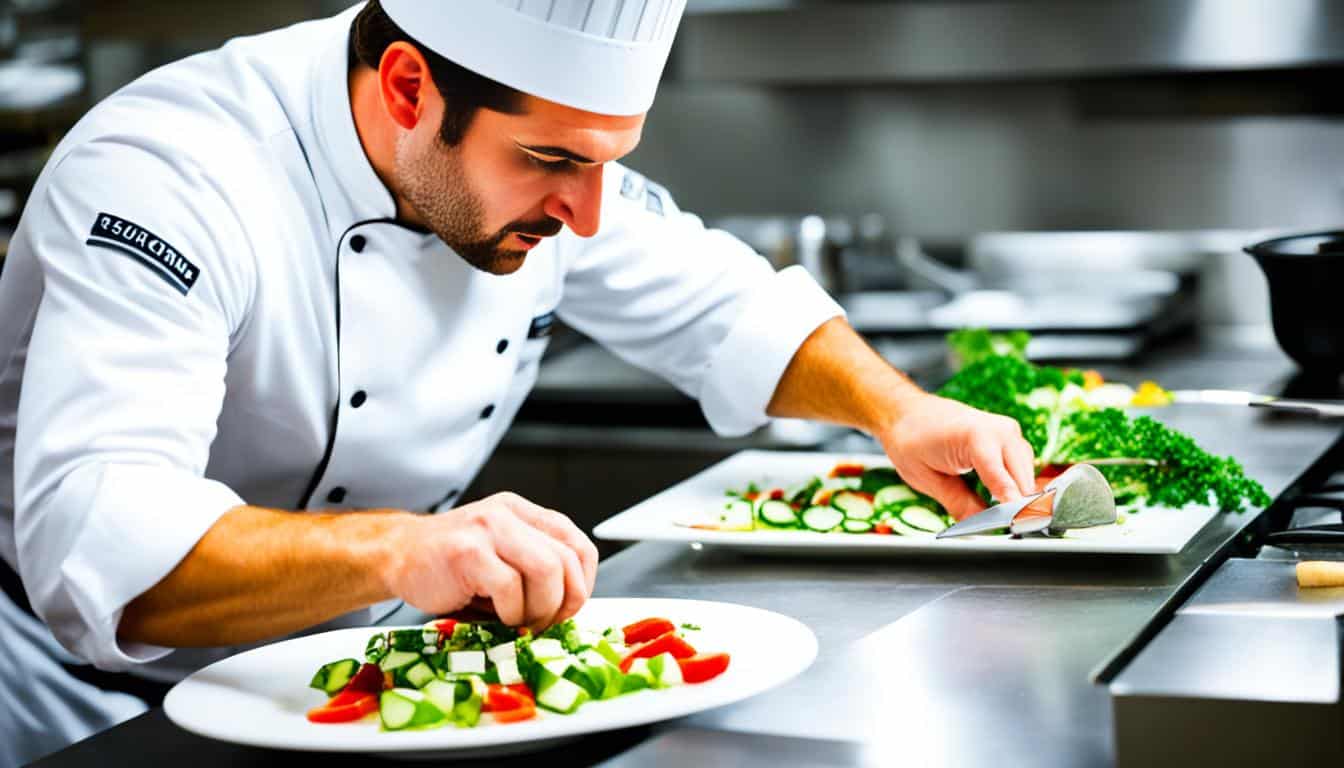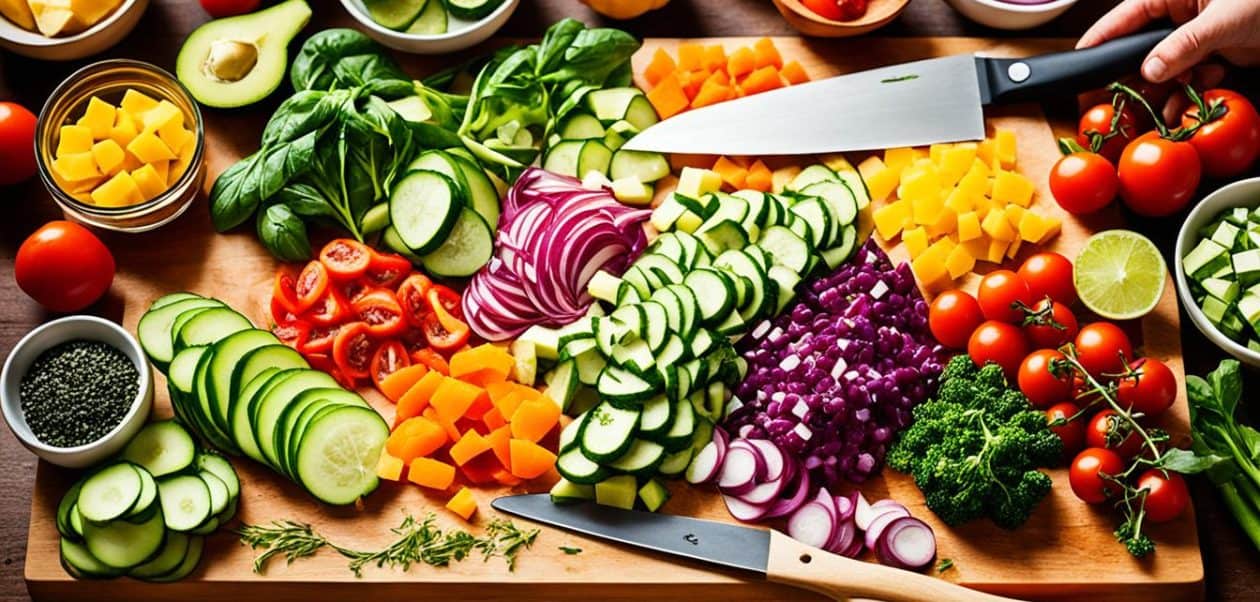
As I stood in my kitchen one late afternoon, the smell of sautéing garlic and fresh herbs filled the air. It reminded me of family dinners around the table. I started my culinary journey relying on pre-packaged meals and simple recipes. But soon, I found myself stuck in a cooking rut.
Like many, I was drawn to the ease of takeaway and fast food. But I realized the joy of making meals from scratch. With each homemade meal, I learned new cooking techniques. This turned cooking from a chore into a creative outlet.
I found that mastering basic culinary skills could elevate my home cooking. It allowed me to impress my family and friends with dishes that looked and tasted great. The idea of being my own master chef became exciting and empowering.
In this article, we’ll explore essential cooking techniques to improve your skills. We’ll look at different styles and methods, understand the basics, and learn what professional chefs do to make amazing dishes. Are you ready to make a difference in your kitchen?
Key Takeaways
- Understanding cooking techniques is key to improving your cooking skills.
- Mastering basic methods can turn simple ingredients into impressive meals.
- Using the right tools and organizing your kitchen makes cooking more efficient.
- Techniques like sautéing and roasting can greatly improve flavor and texture.
- Presentation skills can make a meal look like a work of art.
Understanding the Basics of Cooking Techniques
Learning to cook at home is fun and rewarding. Knowing basic cooking techniques lets you make many tasty meals. Skills like knife handling and controlling heat are key in the kitchen. They help make dishes like boiled pasta, fried veggies, or baked bread turn out great.
Essential Culinary Skills Every Home Cook Should Master
Every home cook should learn some key skills to improve their cooking. These skills make cooking more enjoyable and effective. They include:
| Skill | Description |
|---|---|
| Knife Skills | The ability to chop, dice, and slice food with precision. |
| Heat Control | Understanding different heat levels for cooking techniques, such as simmering and boiling. |
| Measuring Ingredients | Knowing how to accurately measure dry and liquid ingredients using proper abbreviations. |
| Mise en Place | Preparing all ingredients and equipment before starting to cook. |
The Importance of Knowing Cooking Methods
Learning about different cooking methods helps me make a wide variety of dishes. Each method has its own benefits. Grilling and broiling are great for searing food, while simmering and poaching cook delicate proteins well.
Knowing these methods lets me adjust recipes with confidence. This ensures my meals are always well-cooked.
Cooking Techniques: Explore Styles and Methods
Exploring different cooking styles helps me improve my cooking and make better dishes. Each type of cuisine uses its own special techniques. These methods are key to making meals that people remember.
Different Cooking Techniques for Every Cuisine
There are 18 basic cooking methods I can try, divided into dry heat, liquid-based, and oil-based techniques. Dry heat methods like baking, roasting, and grilling make food taste great by browning it. For example, grilling burgers high heat gives them a smoky flavor.
Water-based methods include blanching, boiling, and braising. Braising tougher meats like pork shoulder makes them tender and full of flavor. Poaching fish or steaming vegetables keeps their natural taste and nutrients.
Oil-based techniques like sautéing and frying add more flavor. Searing chicken or stir-frying veggies creates a nice caramelization. Trying different cooking styles from around the world is important for me.
How Cooking Techniques Affect Flavor and Texture
The cooking techniques I use change how a dish tastes and feels. Baking cooks food gently, making cakes and casseroles tender. Frying gives a crispy outside and a moist inside, full of flavor. The cooking temperature is key; above 300 degrees makes food taste better.
Knowing how cooking methods affect flavors and textures helps me in the kitchen. By mastering these techniques, I can make dishes that are both tasty and pleasing to the senses.
Essential Kitchen Tips for Home Cooks
Having a well-organized kitchen makes cooking much better for me. It lets me make meals fast and without hassle. By keeping important tools easy to get to and clearing clutter, I can focus on cooking tasty food. A smart layout can change a messy kitchen into a place where cooking flows smoothly.
Organizing Your Kitchen for Efficiency
I organize my kitchen by setting specific spots for my tools and gear. For example, having a garbage bowl close by cuts down on trips to the trash. This makes cooking smoother. A small handled strainer is great for squeezing lemon or lime quickly, and pre-peeled garlic cloves save time too.
Using immersion blenders for tasks like making soups or smoothies is also a big help.
Must-have Tools and Equipment for Cooking
Having the right kitchen tools makes cooking better. Good knives are key for precise cutting, making food prep easier. Durable cutting boards give me enough room for food prep. Versatile pans let me cook in many ways.
Items like microplane graters help with grating ginger or cheese fast. Quarter-sheet pans are great for baking. And precise scales are a must for baking, making sure my dishes turn out right every time.
Chef Secrets to Elevate Your Home Cooking
I always look for ways to improve my cooking skills in the kitchen. Learning from professional chefs gives me valuable tips that make home cooking better. These tips help turn simple meals into something special.
Insider Tips from Professional Chefs
Knowing about mise en place is key. Chefs say having everything ready and organized helps cooking go smoothly and reduces stress. This way, I can focus on making tasty dishes without worrying about missing ingredients.
Mastering knife skills is also important. Chefs say good knife skills, like chopping and slicing, make cooking faster and easier. Only a few chefs really work on these skills, so practicing can really improve my cooking.
The oil I use is crucial too. Oils like canola or peanut oil are great for frying because they don’t burn easily. Butter and lard are good for sautéing. Choosing the right oil changes the taste of my dishes.
Adding fresh herbs at the end keeps their flavor strong. A bit of vinegar can brighten dull flavors. Knowing how fats like butter and cream enhance flavors is key to making great dishes.
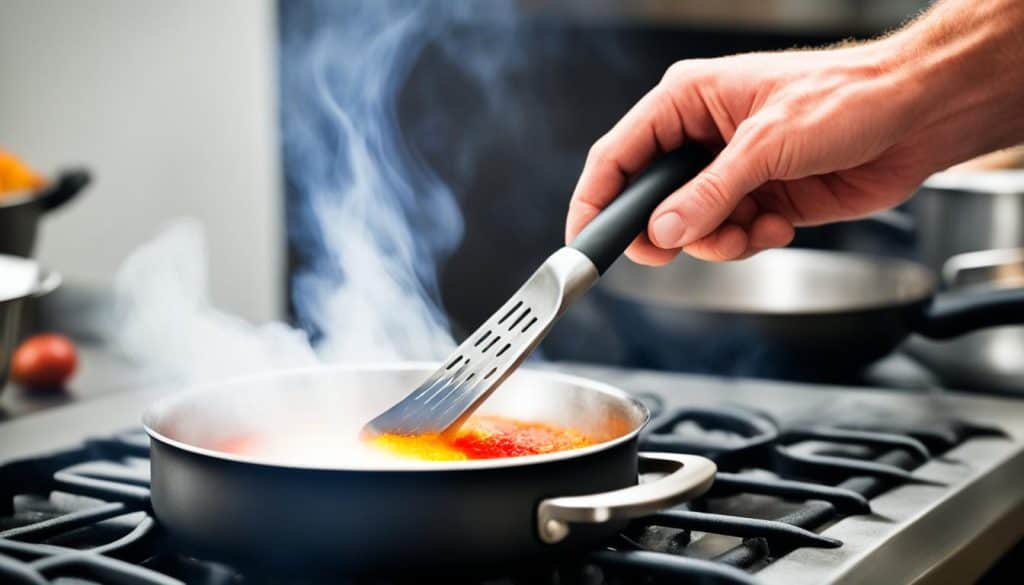
Making sauces is a big part of cooking. Chefs suggest deglazing pans after cooking to add flavor to sauces. They say alcohol doesn’t fully evaporate, so it adds depth to sauces.
To improve my cooking, I can learn to break down a whole chicken. This saves money and uses every part of the chicken. Letting meats rest before cutting makes them juicier.
Finally, I can make meals more special by thinking about what my guests like. Creating menus with a variety of flavors and using seasonal ingredients makes meals unforgettable.
| Tip | Description |
|---|---|
| Mise en Place | Prepare and organize all ingredients before cooking to reduce stress. |
| Knife Skills | Practice chopping, mincing, and slicing for efficient preparation. |
| Choose the Right Oil | Use oils with appropriate smoke points for different cooking methods. |
| Fresh Herbs | Add at the end of cooking to maintain flavor potency. |
| Making Sauces | Learn to create sauces for enhancing dish flavors. |
| Deglazing | Infuse flavors by deglazing pans after cooking. |
| Break Down Chicken | Save money and minimize waste by utilizing the whole ingredient. |
| Resting Meat | Let meats rest before cutting to ensure juiciness. |
| Personalizing Menus | Create memorable meals tailored to guests’ preferences. |
Mastering Fire: The Art of Cooking with Heat
In the culinary world, cooking with heat is key to making tasty meals. Grilling, roasting, and baking are top methods that add unique flavors and textures to dishes. Learning these grilling techniques helps turn simple ingredients into amazing meals.
Grilling, Roasting, and Baking Techniques
Grilling cooks food over a flame, giving it a smoky taste that many love. It’s great for meats and veggies, especially when done with gas or charcoal. About 80% of campers use grilling for their outdoor cooking.
Roasting cooks food in an oven or over flames, bringing out its natural sweetness. It’s perfect for veggies and meats, giving them a crispy outside and juicy inside. Dutch ovens are a hit for roasting, used by 65% of campfire cooks.
Baking is all about making desserts and breads. Campers love making Campfire Skillet Pizza and Dutch Oven Chili, which taste great over heat. A big 95% of campers enjoy using foil packets to cook dishes by the coals.
| Cooking Method | Key Features | Common Foods | Best Practices |
|---|---|---|---|
| Grilling | Direct high heat, smoky flavor | Meats, vegetables | Maintain temperature and use a meat thermometer |
| Roasting | Even heat circulation, caramelization | Root vegetables, poultry | Use Dutch ovens for slow cooking |
| Baking | Heated air cook method, texture development | Breads, desserts | Keep a consistent temperature |
To get better at cooking, I’ve learned about the different fires used, like wood, charcoal, or gas. Each one changes the cooking process and the final dish. Mastering these techniques lets me make versatile and tasty meals safely, keeping food hot and having water ready for emergencies.
Flavor Building: Enhancing Dishes with Aromatics
Aromatics are key to making dishes taste better. They add freshness and make meals special. By learning how to sauté and stir-fry, I can keep the flavors and textures of my ingredients.
Using Herbs and Spices for Maximum Impact
Garlic, onions, ginger, celery, and carrots are essential aromatics. In French cooking, a mix of onions, carrots, and celery is called mirepoix. It’s used in many sauces and stocks.
Italian cooking uses soffritto, while Cajun dishes start with onions, celery, and green bell pepper. These mixes boost flavor and are good for you. Carrots add antioxidants, and garlic gets stronger after chopping.
Using different aromatics can change the taste of a dish. It lets me create new and exciting flavors.
How to Properly Sauté and Stir-fry
Learning to sauté is crucial for great flavor. I heat oil in a pan, then add aromatics. This method is key for soups and stir-fries.
Stir-frying needs high heat and quick cooking. It keeps veggies bright and flavorful. Adding herbs and spices makes each bite delicious and healthy.
| Aromatic Combination | Cuisine | Typical Ratio | Main Uses |
|---|---|---|---|
| Mirepoix | French | 2:1:1 (Onions:Carrots:Celery) | Sauces, Stocks |
| Soffritto | Italian | 2:1:1 (Onions:Carrots:Celery) | Pasta Sauces, Risottos |
| Holy Trinity | Cajun | 1:1:1 (Onions:Celery:Green Bell Pepper) | Gumbo, Étouffée |
Trying out these aromatic mixes can make my dishes burst with flavor. It keeps my cooking exciting and fresh.
Plating and Presentation Tips for Engaging Meals
How we see food greatly affects our experience of it. The way dishes are arranged can turn a simple meal into something special. Using smart plating tricks not only makes dishes look better but also boosts their taste. Studies show people might pay more for a dish that looks great.
Adding height to the plate makes the meal stand out. This adds depth and catches the eye. Cutting meat in a special way also improves looks by showing off textures. Chefs say using different colors makes ingredients stand out and gets people hungry.
Matching the look of the food to the restaurant’s theme makes dining better. The right plate size, color, and style make the meal look as good as it tastes. Light plates are best for colorful dishes, while dark plates make lighter foods look stunning.
How much food you serve matters for a nice presentation. Serving smaller amounts with a few elements lets you get creative with designs. Using edible garnishes can make the dish taste and look better. Everything on the plate should be tasty and pretty.
Learning about the rule of thirds helps with plating. Placing main parts off-center makes the dish look balanced and interesting. This way, diners are drawn into the meal from the start to the end.
Trying different plating styles like classic, free form, and landscape is fun. I love adding my own twist to each dish. The right way to present food can make diners excited even before they eat. I aim to make every meal memorable with these tips.
Experimenting with Cooking Techniques at Home
Trying new things in the kitchen has changed my cooking world. It lets me try out different techniques and make my own style. I’ve found a new passion for learning how to cook by trying out new recipes and methods.
There are so many resources out there, making it fun to quickly learn new cooking skills. This has made cooking at home an exciting adventure.
How to Learn and Adapt Techniques Quickly
Many home cooks want to try new recipes and move beyond the usual dishes. A recent survey showed that 85% of people feel happy when they try new recipes at home. They spend time and money on learning new cooking skills because they see the value in it.
Young cooks, aged 25-35, are leading the way in trying out new recipes. There’s been a 30% increase in people using online platforms for cooking tips. I’m part of this group, excited to learn and grow in the kitchen.
Living in the city, I’m part of the 60% who see cooking as a way to explore new tastes. This has made me more creative in the kitchen.
To make the most of my time, I focus on basic skills like making sauces and cooking techniques. Spending 4-6 hours a week in the kitchen lets me experiment and improve my cooking. Using a method like mise-en-place makes cooking more efficient and helps me succeed.
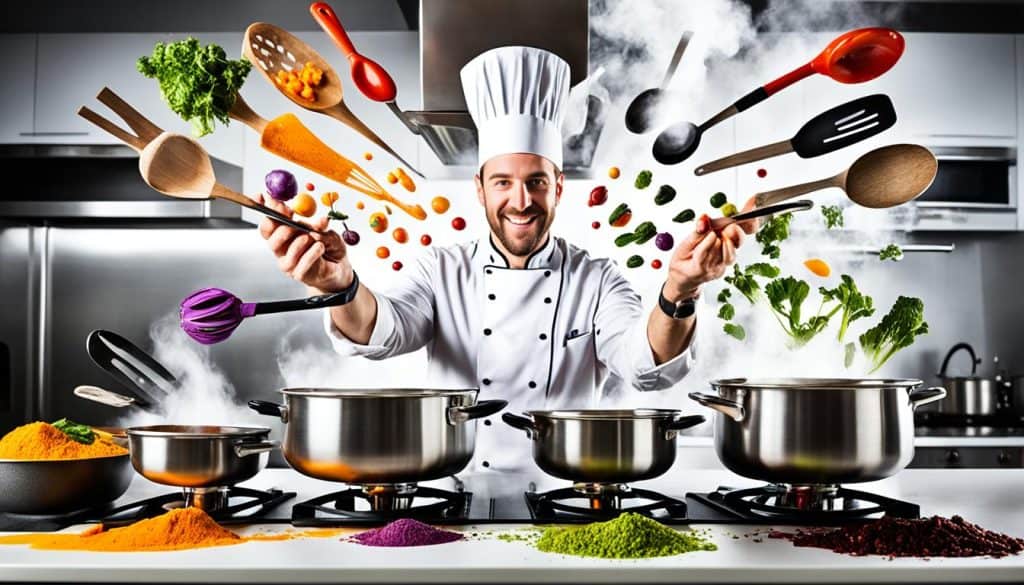
Learning about cooking means understanding the quality of ingredients. Using fresh, seasonal produce makes flavors better and encourages me to try new things. I change recipes and use different ingredients based on what I have and like. This way, 70% of people adjust recipes and 95% think tasting is key. It makes cooking fun and rewarding.
By trusting my instincts and trying new things, I’ve discovered new skills and deepened my love for cooking. This approach has broadened my cooking skills and made me more passionate about it.
Creating Balanced Meals: Combining Techniques
Creating balanced meals is key for those into healthy cooking. Learning to mix different cooking methods boosts the nutrition and taste of my dishes. For example, roasting meats and steaming veggies not only matches flavors but also adds various nutrients to my meals.
When making a balanced meal, I aim for a mix of flavors, textures, and colors. Salt is a vital seasoning that makes food taste great. There are many types of salt, each with its own taste. I add salt slowly, tasting as I go, to get the seasoning just right.
Adding acidity to my cooking is very important. Ingredients like lemon juice and vinegar can really brighten a dish. I use vinaigrettes to balance acid and oil. If it’s too sour, adding more oil or a bit of sugar can fix it.
I keep a well-stocked pantry with different food groups for meal planning. This includes veggies, fruits, proteins, dairy, and grains. Having these items makes it easy to create balanced meals that are both healthy and tasty.
Planning my meals is a big part of my routine. I think about what I need nutritionally and try to use leftovers quickly. Keeping a grocery list helps me avoid forgetting items and reduces waste. With these tips, I can easily cook healthy meals that are both tasty and good for me.
Conclusion and Next Steps for Home Cooks
As I finish this guide on cooking techniques, I realize my cooking journey is just starting. I’ve learned that growing in the kitchen takes time, patience, and a desire to try new things. To get better, I need to try new recipes and methods. Every attempt, even if it doesn’t work out, helps me grow as a home cook.
One important lesson is to think about my kitchen experiences. By looking at what worked well, I can improve my cooking. I plan to mix trying new things with meeting deadlines to make my cooking better. Using A/B testing and getting feedback from others will help me stay on track and avoid getting too caught up in perfection.
To keep improving my cooking skills, I’ll take cooking classes, join online food groups, and use cookbooks and tutorials. I know that feeling confident in basic cooking skills helps with kitchen anxiety. So, I’ll work on improving skills like chopping and sautéing. Every meal I make not only feeds me but also feeds my passion for cooking, making this journey rewarding.