
It was a typical Monday morning when I decided it was time to take charge of my health. Sitting at my desk with a cup of coffee, I felt my routine was too dull. After looking at fitness blogs and videos, I found out effective workouts don’t need to be hard or gym-based.
They can be simple and fit anyone, no matter their fitness level.
Then, I started a beginner’s workout with bodyweight exercises. My energy went up, and my mindset changed. It was amazing to see how 15 to 20 minutes a day could make a big difference.
I felt strong, not just in my body but also in my mind. I learned about different exercises, their benefits, and how staying active keeps me well. This journey showed me how many fitness options there are for everyone, and it made me want to help others start their fitness journeys too.
Key Takeaways
- Fitness routines are scalable to accommodate all experience levels.
- Effective workouts can be done at home without the need for a gym.
- Regular exercise promotes better health and mental well-being.
- Bodyweight exercises provide an efficient full-body workout.
- Consistency and progression are key to successful fitness journeys.
- Incorporating walking can aid in weight loss and improve fitness.
Understanding the Importance of Fitness Routines
Starting a fitness routine might feel tough, but it’s crucial for our health. Regular exercise boosts our physical and mental health. It makes us stronger and happier.
The Role of Exercise in Health and Wellness
Exercise is key to staying healthy. Activities like walking, swimming, and cycling help burn fat and lower blood sugar. This keeps our hearts healthy and cuts down heart disease risks.
Experts say adults need 150 minutes of moderate exercise each week. This keeps health in good shape. Adding strength training twice a week helps keep muscles strong, which is important for moving well.
Physical and Mental Benefits of Regular Workouts
Working out does more than make us look good. It makes us feel better, lowers anxiety, and helps with depression. Studies show regular exercise cuts down on depression.
Physical activities also boost brain power, helping with decisions and learning. Plus, they improve sleep, giving us more energy for the day.

You Don’t Need a Gym: Home-based Fitness Routines
Home workouts let me focus on fitness easily without a gym. I can get great results with bodyweight exercises needing little to no equipment. There are many gym alternatives that work well at home.
Bodyweight Exercises to Try at Home
Bodyweight exercises are key for building strength and endurance at home. They include push-ups, squats, lunges, and planks. These exercises work out many muscles.
I start with simple moves and increase the number of reps and sets as I get fitter. For example, I do three circuits of bodyweight squats, push-ups, and lunges. Later, I move to harder exercises like one-legged squats or dips between surfaces.
Creating a Space for Your Home Workouts
Having a special spot for workouts helps me stay focused and motivated. Even a small area can become my personal gym. I keep it tidy with a yoga mat and resistance bands.
I set a schedule for my workouts, treating them like important meetings. This keeps me on track, boosting my mood and health.
Fitness Routines: Finding the Right Fit for You
Finding the right fitness routine means knowing where I am in my fitness journey. It’s important to understand my goals, whether it’s losing weight or getting stronger. This helps me make workouts that are safe and fun, keeping me motivated.
Identifying Your Fitness Level and Goals
Knowing my fitness level helps me pick the right exercises. Setting clear goals keeps me on track. For beginners, starting with simple goals like 150 minutes of moderate activity a week is a good start. This way, I can slowly get better without feeling overwhelmed.
Demonstrating Adaptability in Workouts
Being adaptable is crucial in my fitness journey. Changing exercises to fit my abilities helps prevent injuries and keeps workouts interesting. I switch between bodyweight exercises and high-intensity interval training (HIIT). As I get fitter, I can change the intensity and how often I work out to match my new level.
Structuring Your Weekly Fitness Routine
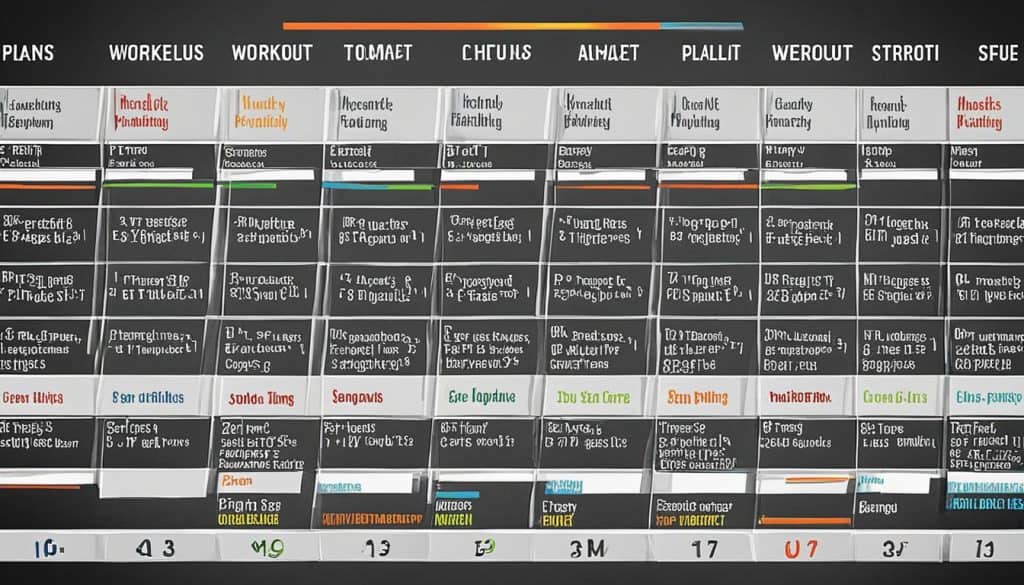
Creating a weekly workout plan is key to staying motivated and reaching fitness goals. A balanced routine should include cardio, strength training, and flexibility. This mix boosts performance and supports both physical and mental health. By spreading time and effort across these areas, I make sure my fitness is well-rounded.
The Balance of Cardio, Strength, and Flexibility
A good workout plan should blend cardio, strength, and flexibility exercises. The CDC suggests 150 minutes of moderate cardio each week, plus two days of muscle-strengthening. Adding flexibility exercises, like stretching or yoga, helps with recovery and injury prevention.
For example, doing cardio three times a week and strength training twice can improve performance and fitness. It’s also smart to rest for 48 hours between working the same muscles. This lets my body heal while I focus on other muscles the next day.
Sample Weekly Exercise Schedule
Here’s what my weekly exercise schedule might look like:
- Monday: 30 minutes of jogging (cardio)
- Tuesday: Total body strength training (30-45 minutes)
- Wednesday: Cycling or brisk walking (cardio, 30 minutes)
- Thursday: Muscle-strengthening workout focusing on arms and legs
- Friday: Rest day with foam rolling and stretching for recovery
- Saturday: 30 minutes of HIIT workouts or swimming (cardio)
- Sunday: Flexibility routine, such as yoga or Pilates
This balanced routine lets me work on cardio, strength, and flexibility. Adjusting the duration and intensity as I get better will help me see even better results. Following this plan, I not only meet my fitness goals but also enjoy the process of getting healthier.
Effective Workouts for Beginners
Starting a fitness journey can be exciting and a bit scary. I remember my first time exercising and feeling unsure. Beginner workouts can turn that doubt into confidence. With the right steps, anyone can start with fitness easily and without stress.
Kickstarting Your Fitness Journey with Simple Exercises
For beginners, starting with simple exercises is key. These exercises should work on strength, cardio, and flexibility. Bodyweight exercises like squats and lunges are great for building strength without needing any special gear. I suggest starting with two workouts a week and slowly adding more intensity and frequency as you get more comfortable.
Building Confidence and Skill
Creating a routine that focuses on cardio and strength helps build confidence. It’s important to take breaks, resting for 60-90 seconds between sets, to avoid getting too tired. With each workout, I see improvements in both my body and mind. This progress keeps me motivated to reach my fitness goals, helping me stay positive and committed.
Intermediate and Advanced Fitness Routines
My fitness journey is taking a big step forward with intermediate and advanced workouts. These routines challenge me and help me grow in strength and endurance. It’s key to know how to pick exercises that push me to my limits.
Progressing to More Challenging Workouts
Switching from beginner to intermediate workouts means doing 3-4 sets of each exercise. I aim for 8 to 15 reps to challenge my muscles without losing form. My goal is to push myself hard in every workout.
For strength and size, I use heavy weights with fewer reps and more rest. This helps my muscles grow. If I want to improve endurance, I use lighter weights with more reps. This keeps my heart rate up and burns calories.
Incorporating High-Intensity Interval Training (HIIT)
Adding HIIT training to my routine has changed everything. It mixes intense exercise with rest periods to make workouts more efficient. Whether it’s running, cycling, or bodyweight exercises, HIIT boosts calorie burn and heart health.
I train 4 or 5 times a week to keep improving and recover well. Each workout makes me more excited to push myself with harder routines. This keeps me motivated to reach new fitness goals.
The Importance of Recovery and Rest Days
Adding recovery and rest days to my fitness plan has changed the game for me. After doing 150 to 300 minutes of moderate or vigorous activity each week, I see how key rest days are. They help my muscles heal and grow. Taking breaks actually boosts my performance and lowers the chance of getting hurt from overdoing it.
During my rest days, I enjoy low-impact activities like walking, swimming, or biking. These activities keep me moving and aid in recovery. Experts say to take a rest day every three to five days of moderate or hard cardio. This approach lets me fit workouts into my life, not the other way around.
Also, I’ve learned how crucial good sleep is for recovery. Kids need 9-12 hours and teens 8-10 hours of sleep each night. I make sure to get enough sleep to help my body recover. Adjusting my rest times based on my training and fitness level has improved my muscle repair and energy levels. I believe in the power of recovery and suggest that rest days are as important as workouts.