
Growing up, I loved our family meals. The smell of Maggi noodles or the sweet scent of Nestlé Toll House cookies brought back memories. Food and family made a special bond.
Living far from home, I realized how important those dinner times were. They helped me feel connected and happy. Missing out made me feel lost and unhappy.
Sharing meals with family is key to making deep memories. These memories help us stay happy and healthy. Studies show that eating together can make families healthier.
Meals like sharing Milo during football or eating Cailler chocolate after sledding were special. They showed me how food brings families closer. Let’s see how meals can change our lives and connect us more deeply.
Key Takeaways
- Family meals are key to building strong family ties.
- Regular shared meals promote better physical and mental health.
- Food bonding creates lasting memories of togetherness.
- Participating in family meals encourages healthier eating habits.
- Consistent mealtimes reduce stress and enhance family dynamics.
The Importance of Family Meals
Family meals are key to building strong relationships and supporting well-being. A study found that 80% of American families see the value in eating together. Sharing meals often means eating healthier, as families tend to make balanced and nutritious food.
This link between family meals and health benefits is strong. It helps kids manage their weight better. Eating together also gives emotional support. It lets families talk openly about their day, worries, and wins.
These moments make kids feel safe and part of the family. Experts say sharing meal tasks brings families closer. When I help prepare meals, I see how it strengthens our family ties.
Research shows that eating together helps families deal with stress. Teens who eat with their families eat more fruits and veggies and develop better eating habits. A 2022 survey by the American Heart Association found that 91% of parents felt less stressed when eating with their families.
These meals are good for family life. They help prevent eating disorders and substance use in teens.

Regular family meals boost emotional ties and improve nutrition. Just sitting down to dinner together builds a sense of unity. It can have a positive effect on families for years to come.
Feeling heard during meals can also make kids feel better about themselves. This shows that family meals are more than just about food. They’re about sharing life and building strong relationships.
How Food Strengthens Family Ties
Sharing meals is more than just eating together. It creates moments that bring families closer. Each meal is a chance for laughter, stories, and sharing life experiences. These moments build a strong family bond.
Whether it’s a big holiday meal or a simple dinner, these times make lasting memories. They help us create stories, traditions, and bonds that we’ll always remember.
Creating Unforgettable Moments Together
Family meals are full of joy and connection. Studies show that eating together regularly makes families feel closer and happier. Talking about our day or sharing funny stories makes everyone feel important and supported.
Sharing food brings a sense of belonging. This leads to moments we’ll always remember, adding to our family’s history.
Setting a Consistent Mealtime Routine
Having a regular mealtime routine is key for family bonding and talking more. It makes it easier for everyone to come together, even when life gets busy. Families that make time for meals often have better relationships and feel closer.
Sticking to a routine brings stability to our families. It helps us connect more deeply.
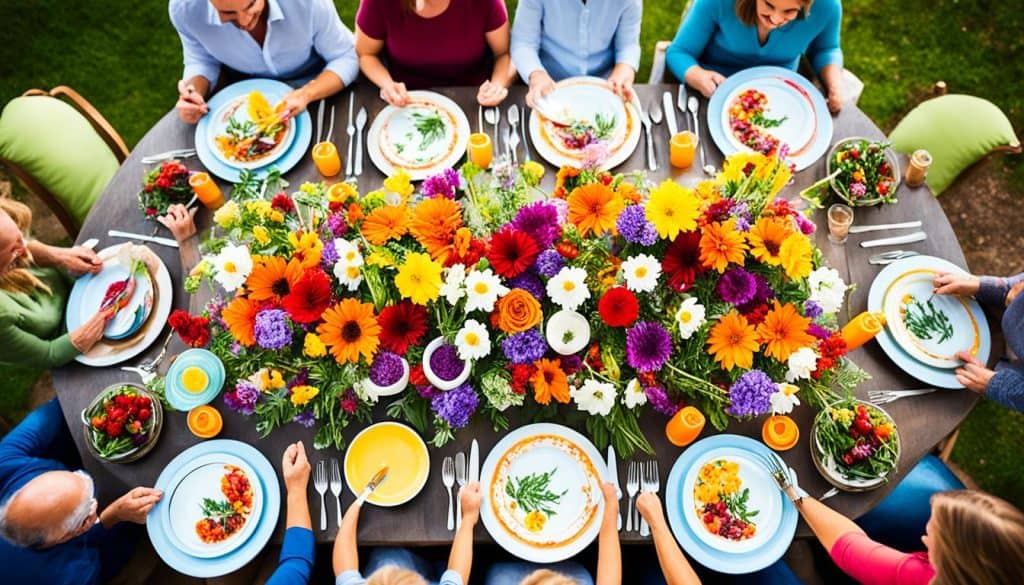
Food and Family: Building Stronger Connections
Sharing meals with family is more than just eating together. It helps with communication and emotional health. When we sit down to eat, trust and understanding grow. This setting lets family members share their feelings freely.
Children learn how to deal with tough times. Adults get support, which helps their mental health. These moments bring families closer together, making their bond stronger.
Fostering Communication and Emotional well-being
Mealtimes are key for deep talks. They help family members connect on many levels. This boosts their emotional health.
It teaches kids about being honest and understanding feelings. Sharing food makes everyone feel included. It also leads to talks about feelings and experiences, making a safe space for all.
Enhancing Social Skills and Empathy
The dining table is key for learning social skills and empathy. It’s where families teach good manners and listening skills. These talks help kids see different viewpoints, making them more empathetic.
Talking about food and likes helps families share memories. This builds stronger bonds through these shared moments.
Culinary Traditions That Bind Us
Culinary traditions connect families deeply, creating strong bonds and memories. They come from recipes passed down through generations, showing us our family’s history. Exploring these recipes helps us connect with our roots and brings stories to life at mealtime.
Discovering Generational Recipes
Many families make dishes that reflect their cultural backgrounds. For example, Italian-American families in the Mohawk Valley make homemade pasta with local garlic every Sunday. This tradition connects the past and present, teaching younger family members about tradition and love through food.
Sharing these recipes is a journey that I cherish with my family. It keeps our culinary heritage alive.
Establishing Family Cooking Rituals
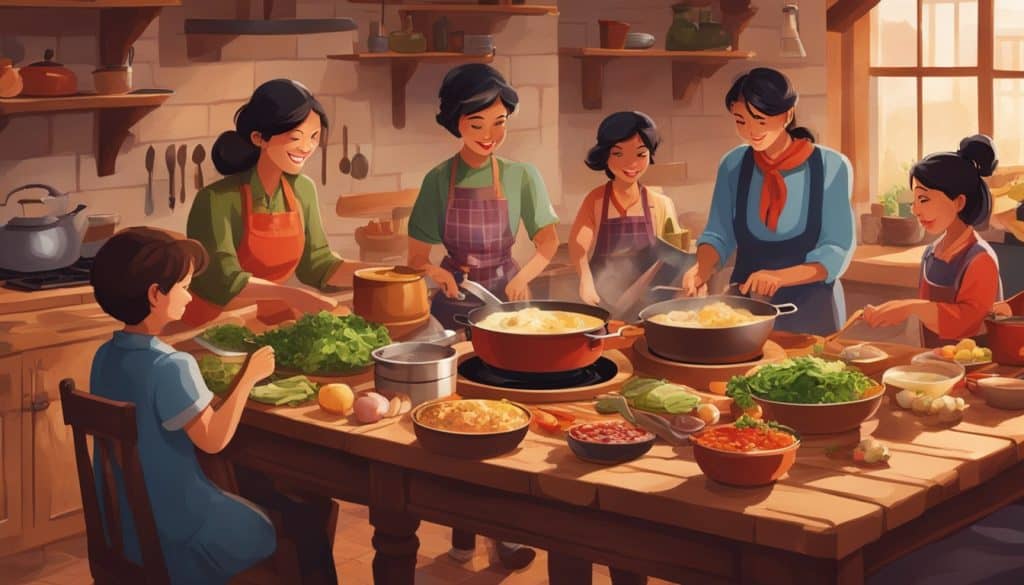
Setting aside time for cooking together strengthens family bonds. I suggest cooking meals together once a week. It’s a great way to share stories and make delicious food.
Getting kids involved in cooking teaches them about their food’s origins. Growing a garden and shopping for local ingredients can spark their interest in food and sustainability. Making mealtimes special, without distractions, turns dinners into events filled with laughter and connection.
Practical Tips for Enjoyable Family Meals
Creating enjoyable family meals means setting a regular mealtime schedule. This helps everyone know when to be there and strengthens family bonds. Letting kids help with meal planning and cooking teaches them new skills and makes them more excited to try new foods.
This involvement can make them feel proud of their role and lead to better eating habits. An inviting atmosphere is key to a great mealtime. A place without distractions lets everyone talk and connect better.
Using bright plates, laughing together, and talking about good things makes meals warm and welcoming. Planning meals ahead, like making five meals for the week, can make cooking easier and cleanup quicker.
Try serving meals family-style to make dining more fun and help with picky eating. This way, everyone can pick what they want, which can broaden their food tastes. Learning about healthy eating and balanced meals is also important for a good relationship with food.
With these tips, you can make family meals a special part of your week.


