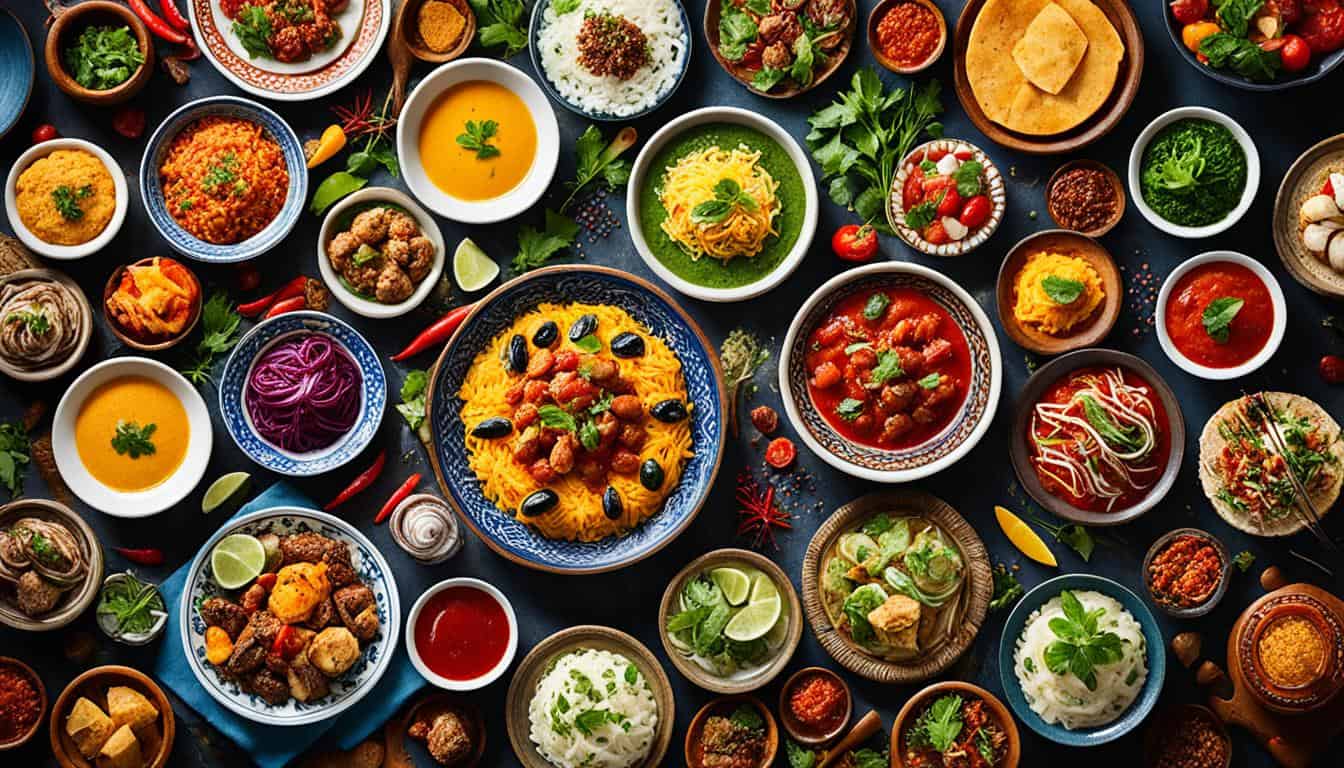
When I sit down with my family during the holidays, I feel the warmth of our food traditions. Each dish has a story, full of history and cultural importance. It connects us to our ancestors. This is clear during New Year’s, when we enjoy Hoppin’ John, a dish with deep roots in African heritage in the South.
Food traditions are more than just recipes. They are a way to share our cultures, passed down through generations. They let us taste the flavors of Mexico with tamales or Ukraine with borscht. These dishes are a piece of who we are and a peek into our history. As the world gets closer together, learning about these traditions helps us appreciate different cultures and connect with others.
Key Takeaways
- UNESCO recognizes 30 food-related traditions as part of its Intangible Cultural Heritage list.
- Food customs can enhance social bonding and improve well-being.
- Traditional recipes preserve history, narrating the story of the people behind the food.
- For immigrants, food traditions serve as reminders of their homeland and shared values.
- Healthy eating can be more than just calorie counting; reconnecting with cultural foods supports wellness.
The Deep Connection Between Food and Culture
Food is more than just something we eat. It’s a deep part of our shared experiences and values. It’s not just about the food itself but the stories and traditions behind it. Exploring different foods shows how they shape our cultural identity and daily lives.
Understanding Food Culture
Food culture is about the beliefs, practices, and rituals we have with food. It’s amazing to see how local landscapes and historical events shape unique cooking traditions. For example, the mix of flavors and techniques in different places shows their geographic diversity and cultural mix.
Whether it’s a Caribbean one-pot dish or street food from food tourism, each meal tells a story of a community’s culture. It’s a visual way to see a community’s cultural fabric.
The Role of Cooking in Cultural Identity
Cooking traditions are a way to express our cultural identity. They connect generations through shared recipes. When I share meals with others, I see how food brings people together, making us feel like we belong.
Cultural foods often have similarities to mainstream dishes but are important for representation in our diets. Foods like Ugali from Tanzania and kalua pork from Hawaii remind us of the diverse stories in our food experiences.
Food Traditions: A UNESCO Perspective
Exploring food traditions shows us the deep roots of human culture. UNESCO highlights the strong bond between food and community. It lists these traditions as part of its Intangible Cultural Heritage.
UNESCO’s Intangible Cultural Heritage Listings
UNESCO protects over 1,000 sites and landmarks worldwide. It also lists over 38 elements in the Culinary Intangible Heritage. These include music, dance, and food traditions, showing their importance.
For example, Mexican cuisine blends Spanish and Aztec influences. The Mediterranean diet, recognized in 2010, shows how cultures like Cyprus, Croatia, and Portugal have exchanged foods.
Key Examples of Recognized Culinary Customs
Many regions have unique food traditions that UNESCO has spotlighted. Neapolitan pizza in Italy is made by skilled artisans. In Malawi, Nsima, a thick cornmeal porridge, is a key dish for community events.
Flatbreads in Iran, Azerbaijan, and Turkey are simple yet versatile. They’re made from just wheat flour, water, and salt. Keşkek, a Turkish dish, is served at special events with music.
These examples show the beauty and importance of preserving food traditions. They remind us of the need to keep them alive as the world changes.
Global Festivals Celebrating Culinary Customs
Food festivals around the world are a mix of flavors and culture. They show off traditions and bring people together through food. Diwali in India and Thanksgiving in the USA are great examples of this.
Diwali: The Festival of Light in India
Diwali, the Festival of Lights, fills the air with tasty foods and sweets. These dishes symbolize joy and coming together. Families make and share foods like samosas and gulab jamun.
This festival is not just about being spiritual. It also celebrates family bonds over meals. Food is key to the Diwali experience.
Thanksgiving: A Day of Giving Thanks in the USA
Thanksgiving in the USA is a time of thanks and plenty at the dinner table. Families enjoy a feast with turkey, stuffing, and pumpkin pie. This holiday has roots in the shared meals of Native Americans and Pilgrims.
These foods tell a story of unity. That’s why Thanksgiving is important in American food culture.
Regional Specialties and Their Significance
Exploring regional specialties shows how unique dishes are important in each culture. They bring together special flavors, ingredients, and cooking ways. This creates a rich food world that tells stories of where they come from.
Unique Dishes Across Continents
Unique dishes around the world show off local ingredients and traditions. In New England, clam chowder mixes creamy textures with savory tastes. There are three types—New England, Manhattan, and Rhode Island chowder—each showing what people in those areas like.
Further south, Southern cuisine is all about comfort foods like fried chicken and cornbread. These dishes have a long history of bringing people together for meals.
Differences in Preparation and Ingredients
How food is prepared changes a lot from one region to another. This is because of the ingredients available and the cooking traditions. For instance, fry bread from the Navajo Nation shows how people cooked with what they had during tough times.
On the other hand, the bison burger in the Midwest is a leaner choice compared to traditional beef. This shows how people are now looking for healthier food options. These differences in cooking highlight how food traditions change over time, making the world’s food scene richer.
Food Traditions and Community Building
Food traditions are key to building strong communities. Sharing meals helps people connect deeply. It brings a sense of unity and togetherness that’s vital for personal relationships.
Research from the University of Oxford shows that eating with others makes people happier and more satisfied with life. This highlights how meals with others are crucial for building social bonds and shared experiences.
How Shared Meals Foster Connections
Cooking classes, food festivals, and potlucks bring people from different backgrounds together. These events are more than just about food. They are chances to learn and build relationships.
Supporting local food businesses by buying ingredients from local farms strengthens community bonds. Sharing culinary traditions sparks a spirit of celebration and connection that goes beyond the table.
The Evolution of Communal Eating Practices
Communal eating has changed over time, affected by economic growth and social changes. Food businesses focused on the community can revitalize neighborhoods by creating jobs and boosting local spending.
Local food trucks and popups become places where people share stories and make memories. They help people feel like they belong. Events like farmer’s markets and food fairs bring people together, making the community stronger and more connected.


