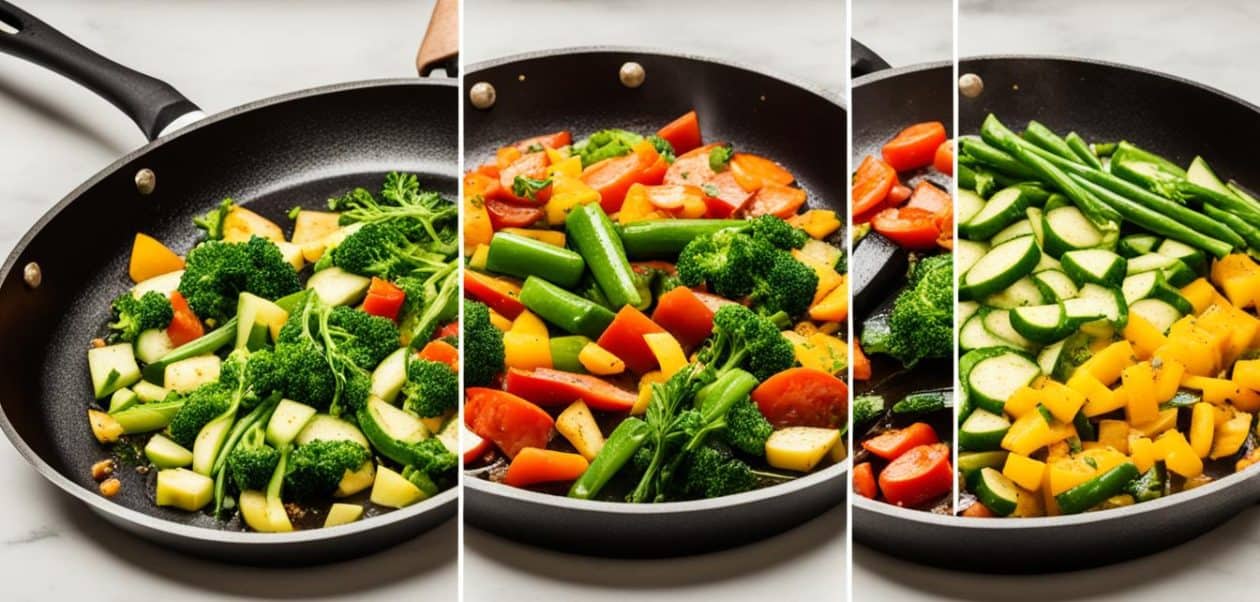
As I stood in my kitchen, the smell of spices filled the air, taking me back to family dinners and laughter. It was during one of those evenings that I realized cooking is more than just a routine. It’s a passion, an art, and a journey of discovery. I tried chaunk, the Indian way of blooming spices in hot oil, and saw how simple ingredients turned into a fragrant mix. This sparked my desire to learn cooking techniques to make meals special.
Mastering these techniques is key, whether you’re starting or refining your skills. I learned about sous vide and en papillote, among others. Each technique opened new doors for me, making me want to try more and grow as a cook. Let’s explore the cooking techniques that can make your cooking better.
Key Takeaways
- Cooking techniques enhance both basic and advanced culinary skills.
- Experimentation is key to discovering your unique cooking style.
- Investing in quality kitchen equipment can significantly improve your cooking experience.
- Learning methods like sous vide and chaunk can elevate the flavors of your dishes.
- Repetition and technique practice are essential for achieving culinary mastery.
- Enrolling in cooking classes offers valuable insights from experienced chefs.
- Developing a keen palate helps in tasting and adjusting your dishes effectively.
Understanding the Basics of Culinary Skills
Every aspiring cook should start by mastering the foundational culinary skills. These skills are the basics that set the stage for their journey in the kitchen. It’s important to know how to pick quality ingredients, read recipes right, and understand different cooking methods. These skills are the building blocks for more advanced cooking.
Key kitchen fundamentals include cooking methods like sautéing, boiling, and baking. For example, bringing water to a rolling boil at 212°F is key for cooking pasta or hard-boiling eggs. A slow boil, around 205°F, is best for making broth.
Simmering, between 190°F and 205°F, lets dishes like dried beans and rich braises develop flavor without losing moisture. Beyond temperature control, getting the oil-to-vinegar ratio right for vinaigrettes can greatly improve flavor. The classic French formula suggests a 3:1 ratio, but many now use a 1:1 ratio for a balanced taste.
When roasting, preheat your oven to a temperature between 375°F and 425°F for perfectly cooked vegetables. A simple rule for seasoning is one tablespoon of oil and half a teaspoon of kosher salt per pound of vegetables.
Using the right tools is also key in improving my culinary skills. Essential items include a chef’s knife, cutting boards made of food-safe materials, and various pots and pans. For example, choosing between cast iron and stainless steel pans can affect how well they sear food. A well-heated pan with dry food and minimal oil creates a beautiful crust while keeping the food moist.
Understanding how to deglaze pans takes my cooking to the next level. Adding a flavorful liquid to a hot pan helps create rich sauces from the pan drippings. Cooking eggs gently over low heat prevents them from overcooking, resulting in perfect eggs.
By focusing on these basic cooking techniques, I can make dishes that are both flavorful and memorable. Embracing these kitchen fundamentals will help me manage my cooking with clarity and precision.
The Importance of Knife Skills in the Kitchen
Knife skills are key in the kitchen, making food prep safer and more efficient. A big 73% of cooks and chefs say mastering knives is crucial for top cooking. Knowing how to cut well means you get even pieces and make dishes look great.
Getting veggies cut the same size is important for good meals. It makes a big difference in how food turns out. Most people, 88%, say better knife skills make cooking faster and better.
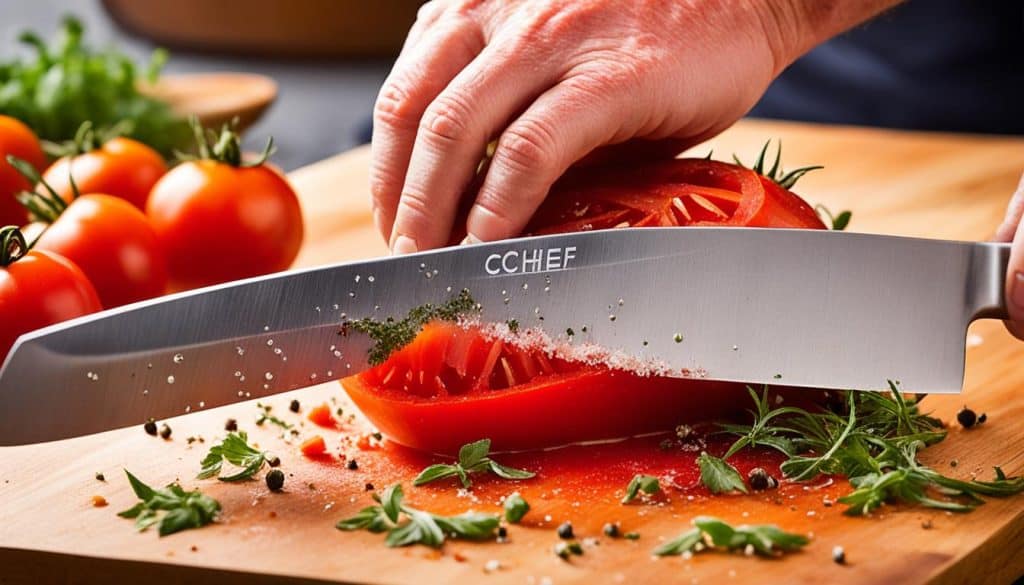
Using the right knives is vital for safe and efficient cooking. Experts suggest having a paring, serrated, and chef’s knife at home. Choosing quality knives, like forged ones, is important, with 89% saying it matters a lot.
Looking after your knives is also key. Sharpening them regularly is a must, say 67% of experts. Practicing and being patient helps get better at using knives. Good knife skills make the kitchen safer, with 81% noting that a stable surface and proper stance prevent accidents.
For improving your skills, consider taking a class or watching online tutorials. Learning from famous chefs can teach you various cutting styles and traditions. 78% of people found that learning how to handle knives better improved their cooking a lot.
| Knife Type | Recommended Uses | Ideal Size | Care Tips |
|---|---|---|---|
| Paring Knife | Peeling, trimming | 3-4 inches | Hand wash, dry immediately |
| Serrated Knife | Bread, soft fruits | 8-10 inches | Regular sharpening |
| Chef’s Knife | General chopping, slicing | 5-10 inches | Avoid dishwasher, store safely |
Learning knife skills is a must for serious cooks. These skills make cooking faster and safer. With practice and dedication, anyone can get better at using knives and improve their cooking.
Cooking Techniques: Master the Essentials
Learning essential cooking techniques is key to improving your cooking skills. Knowing how to roast, grill, braise, and stew can take your dishes to the next level. Each method adds special flavors and textures, so it’s important to know the differences.
Discovering dry-heat methods like broiling and sautéing changed my cooking a lot. At the same time, learning moist-heat techniques like poaching and steaming helped me make healthier dishes. These basics let you try more advanced methods and keep cooking exciting.
To show how different cooking techniques change dishes, look at this comparison table:
| Technique | Cooking Type | Flavor Profile | Texture Outcome |
|---|---|---|---|
| Roasting | Dry-heat | Rich, Caramelized | Crispy Outside, Tender Inside |
| Braising | Moist-heat | Deep, Savory | Fall-apart Tender |
| Grilling | Dry-heat | Smoky, Charred | Juicy, Grilled Marks |
| Stewing | Moist-heat | Complex, Layered | Tender, Hearty Pieces |
Trying out these techniques leads to tasty dishes and more kitchen confidence. Through experimentation, I found what I like and grew my cooking skills. Taking on new culinary challenges made cooking more fun and let me surprise my family and friends with tasty meals.
Temperature Control for Perfectly Cooked Dishes
Getting dishes just right depends a lot on controlling the temperature. Knowing how to handle heat turns cooking into a precise art. This part talks about the key role of a food thermometer and preheating in making cooking more precise.
Using a Thermometer for Precision
A food thermometer is a must-have in my kitchen. It gives accurate readings, making sure meats and dishes are cooked right. For example, sous vide cooking shows how important temperature control is for consistent results.
Sous vide cooks food at a steady temperature for a long time. This means you don’t have to worry about overcooking or undercooking. Chefs love it because it keeps food moist and full of flavor while hitting the perfect temperature.
With a food thermometer, I can watch the cooking closely and make any needed changes. This ensures perfection every time.
Preheating and Its Role in Cooking
Preheating ovens and pans is key for even cooking. By preheating, I set the stage for perfect cooking from the start. It’s important whether I’m using sous vide or traditional baking.
Starting with the right temperature changes cooking times and results. For instance, preheated pans cook food evenly, giving great browning and flavor. In the oven, preheating means food cooks right, with better texture.
This step is what makes the difference between good and great cooking. It makes meals taste better and look more appealing.
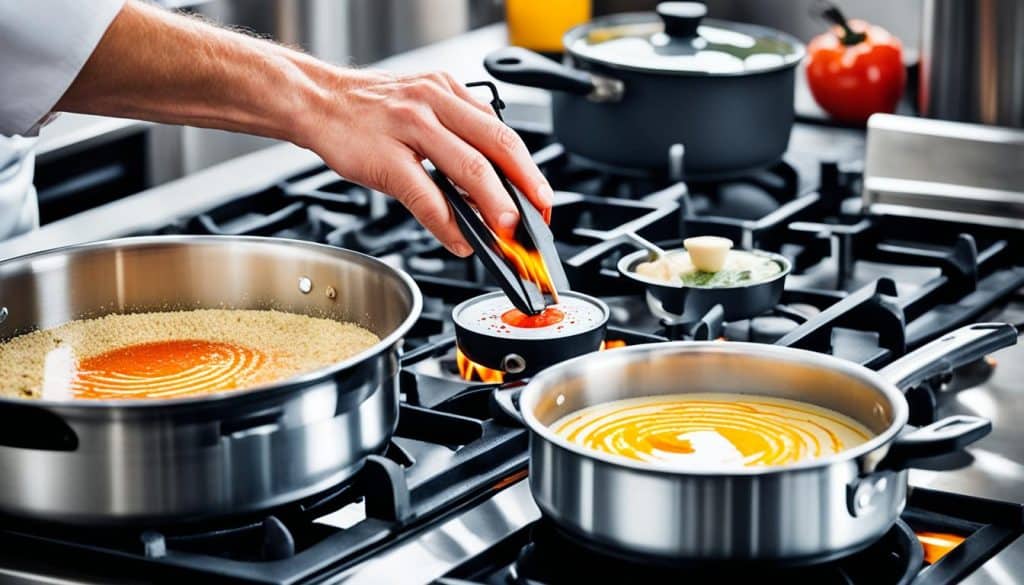
Flavor Development: Building Layers in Your Dishes
Creating rich dishes means layering different tastes to make each meal special. Using herbs and spices is key to this process. Each one adds a unique flavor, making dishes more interesting and deep.
Experimenting with Herbs and Spices
It’s important to use herbs and spices in moderation. They should enhance the main ingredients, not overpower them. The key elements of flavor are salt, fat, acid, and heat. These add unique tastes to dishes, making them balanced and tasty.
I enjoy making dishes like a Caprese salad or sautéed broccoli with garlic and lemon. These recipes show how well these flavors work together.
Cooking Methods That Enhance Flavor
Different cooking methods can change how food tastes. Techniques like salting, sautéing, and roasting bring out the best in ingredients. Roasting vegetables makes them taste deep and caramelized.
Heating food can also start the Maillard reaction, which makes flavors even better. Knowing how to use salt, fat, acid, sugar, and crunch is important. These elements help make dishes not just tasty but also memorable.
The tongue can taste over 10,000 different flavors. Paying attention to smells while cooking gives clues about the dish. Seasoning early helps spread flavors evenly, making the dish taste better.
With practice and a good sense of taste, I can improve my cooking. This leads to more enjoyable meals.
Effective Seasoning Techniques for Delicious Meals
Learning how to season your food can take your cooking to the next level. Using the right seasoning techniques is key to getting that amazing umami flavor. Every dish needs the perfect mix of spices and seasonings to shine.
The Art of Tasting and Adjusting
Tasting your food as you cook is crucial. It lets you adjust the flavors to your liking. I start with salt, adding it bit by bit because different salts vary in saltiness. For example, Morton kosher salt is about twice as salty as Diamond Crystal.
Adding fresh herbs or a squeeze of citrus can also make flavors pop. This adds depth and freshness to your dishes.
Exploring Umami: The Flavor Boost
Understanding umami can really improve your cooking. This savory taste is found in things like soy sauce, miso, and ripe tomatoes. Adding these ingredients gives your dishes a flavor boost that many love.
To enhance umami, try toasting whole spices before grinding them. This brings out new flavors. Making your own spice blends, like chili or Mediterranean, can also make your meals stand out.
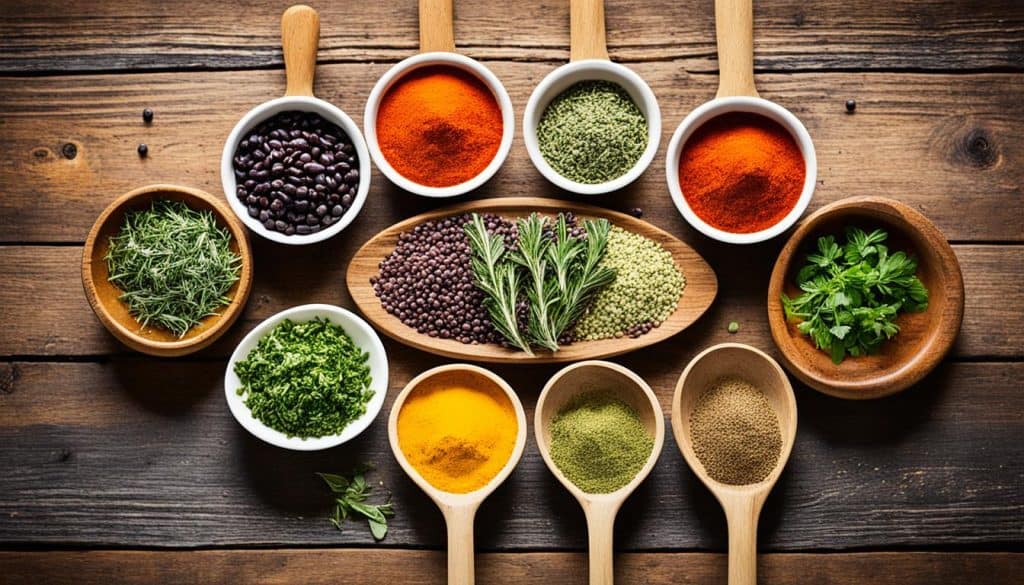
Storing spices right is important for keeping their flavor. Keep them in a cool, dry place around 70°F. Don’t store them near heat sources like the stove. Ground spices have expiration dates, so using old ones can result in dull flavors.
I always use freshly ground black pepper for a stronger taste. It’s better than pre-ground pepper.
| Spice Type | Freshness Method | Flavor Impact |
|---|---|---|
| Whole Spices | Grind when needed | Stronger, more vibrant |
| Pre-ground Spices | Avoid if past expiration | Muted, weaker flavor |
| Dried Herbs | Add early in cooking | Develops flavor through cooking |
| Citrus & Acidic Ingredients | Add towards end of cooking | Brightens and elevates flavors |
By using these tips in your cooking, you can make your dishes incredibly flavorful. Embrace seasoning and umami to make meals that people will remember.
Textural Variety: Importance of Texture in Cooking
Texture in cooking is key to a full sensory experience. Getting different textures like crispy, tender, or velvety can change a dish completely. Food’s physical parts, like proteins and fats, play a big role in these textures. Tests help us see how these affect taste.
To cook for texture, you need to know what makes each dish feel a certain way. For example, most people like a mix of crisp and creamy in salads. Cooking pasta al dente is a favorite for many, showing the importance of getting the cooking right.
Texture isn’t just about taste; it also makes people like a dish more. Since many people think texture is as important as flavor, I pay a lot of attention to it. When I serve food, I make sure the texture looks good and tastes great. This makes meals more enjoyable for everyone.
Adding different textures makes dishes look and taste better. I use tools to analyze textures, which helps me improve my cooking. This way, I can make sure my food is the best it can be.
| Texture Type | Description | Imagined Dish |
|---|---|---|
| Crispy | Light and crunchy texture that creates a delightful bite. | Fried Chicken |
| Tender | Soft and easy to chew, often associated with well-cooked meats. | Slow-Cooked Beef |
| Velvety | Smooth and rich, perfect for creamy sauces or desserts. | Chocolate Mousse |
| Chewy | Requires a bit of effort to chew, enhancing the eating experience. | Bagels |
| Flaky | Brittle texture that crumbles easily, ideal in pastries. | Puff Pastry |
Mastering texture in cooking can make meals more enjoyable. By focusing on texture, I can create dishes that touch all your senses.
Kitchen Secrets for Organization and Cleanup
Organizing your kitchen is key to a smooth cooking experience. Following the “clean as you go” rule makes cooking less stressful. It keeps your kitchen safe by letting you handle spills quickly and prevents accidents.
Having a clean kitchen lets you work better. You can make more dishes or handle complex recipes easily. This makes cooking more fun and efficient.
Streamlining Your Cooking Process
Using trays and containers for utensils helps a lot. It cuts down on dishes to wash later. A garbage bowl for scraps keeps your area clean and makes cooking smoother.
Preparing ingredients before cooking, or mise en place, keeps you organized. It also lowers the risk of mistakes. Having a damp cloth or sponge for quick cleanups keeps your area clean during cooking.
Practicing Good Kitchen Hygiene
Keeping your kitchen clean is important for health and safety. Wash your hands before and after handling food or dirty surfaces. Soaking pots in hot, soapy water makes cleaning up easier later.
After cooking, clean all surfaces and your utensils. Putting your kitchen back in order makes it welcoming for the next meal. It also helps you stay calm and focused on cooking.