Standing in my kitchen, the smell of sautéing onions filled the air. It reminded me of the many evenings I spent cooking for my loved ones. Each chop of the knife showed my journey in learning key cooking skills.
This journey turned home-cooked meals into memories we all cherish. I recall my first time learning about mise en place. It taught me how organizing my ingredients makes cooking easier and lets me focus on creating art.
It wasn’t just about the taste; it was a dance of technique. With the right techniques, I could make dishes as good as those in restaurants. People would always want more. This article will explore chef methods that improve flavor and cooking experience.
We’ll look at knife skills and how to get a perfect sear on meat. Join me as we uncover kitchen secrets that make every bite special!
Key Takeaways
- Mastering basic cooking techniques can significantly elevate your culinary skills.
- Understanding mise en place can streamline your cooking process.
- Investing in a quality chef knife enhances safety and precision in the kitchen.
- Proper cooking methods lead to healthier meal options and greater creativity.
- Cooking at home can provide cost-effective and delicious meal solutions.
The Importance of Mastering Cooking Techniques
Learning cooking techniques has many benefits. It improves my skills and makes cooking at home more fun. With a good base, I can try out many dishes and enjoy the perks of cooking at home.
Benefits of Cooking at Home
Cooking at home is cheaper than eating out or buying pre-made meals. It saves money and lets me make healthier meals that I like. I can choose the ingredients, which means better nutrition and a healthier life.
As I cook more, I get better at it. This builds my confidence as I make my favorite dishes.
Healthier Options and Creative Flexibility
Improving my cooking skills lets me play with flavors and ingredients. This makes cooking exciting and fun. I can try out different cuisines and methods.
Using resources like cooking classes and online tutorials helps me grow. This lets me make healthier, tasty meals. As I practice, I love sharing my dishes with family and friends, making my cooking journey richer.
| Benefit | Description |
|---|---|
| Cost Savings | Preparing meals at home significantly reduces food expenses. |
| Healthier Choices | Greater control over ingredients leads to nutritious meals. |
| Skill Development | Mastering cooking techniques improves confidence and efficiency. |
| Creative Expression | Experimenting with flavors enhances personal cooking style. |
Basic Knife Skills
Learning basic knife skills is key to being a great cook. A good chef knife makes cooking safer and more efficient. You don’t have to spend a lot to get a quality knife. A sharp knife is safer and helps avoid accidents.
With the right tools and skills, I can improve my cooking. This ensures my ingredients are prepared just right.
Investing in a Quality Chef Knife
Choosing the right chef knife changes how I cook. I suggest getting three main knives: a serrated knife, a chef’s knife, and a paring knife. Each knife has its own special use, making my cooking better.
A quality chef knife is versatile, great for slicing, dicing, and mincing. It also helps me cut more precisely because it’s well-balanced.
Learning Proper Chopping Techniques
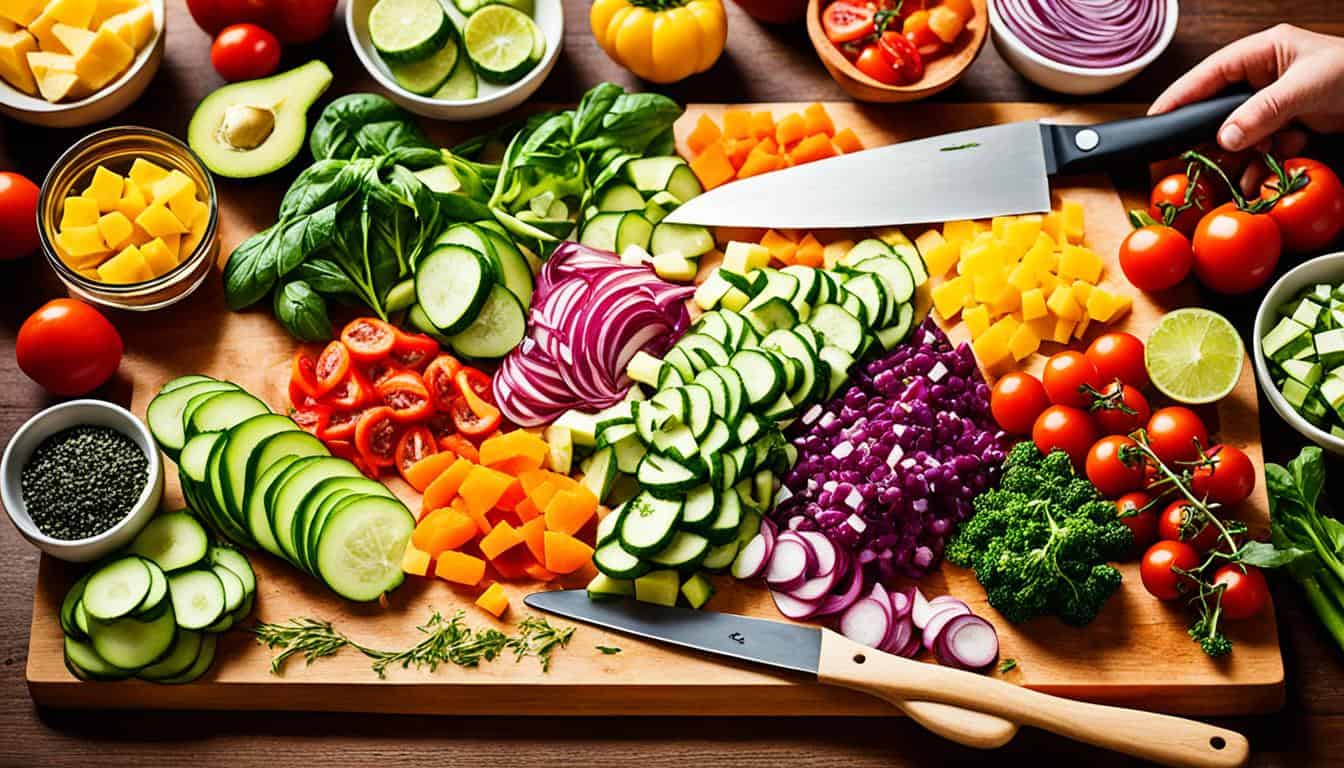
Mastering chopping techniques is crucial for better knife skills. Using the pinch grip gives me better control for even cuts. Here are some key cutting methods I use:
| Technique | Description | Size |
|---|---|---|
| Julienne | Cut into thin matchsticks | 2 ½” long, 1/8″ wide |
| Fine Julienne | Finer julienne cut for delicate dishes | 2 ½” long, 1/16″ wide |
| Batonnet | Similar to julienne, but thicker | 2 ½” long, ¼” wide |
| Brunoise | Dicing julienned strips into small cubes | 1/8″ cubes |
| Mincing | Cutting into very fine pieces | N/A |
| Chiffonade | Cutting leafy greens into thin ribbons | N/A |
Using these chopping techniques makes me more efficient in the kitchen. Each cut affects the cooking process, the look, and the taste of my dishes. As I get better with my knife skills, I enjoy cooking more.

Sautéing and Browning Meats
Sautéing and browning meats make a great base for many dishes. These techniques boost flavor and make the meal look better. It’s key to control the heat and time to get a perfect sear and enhance flavors through the Maillard reaction.
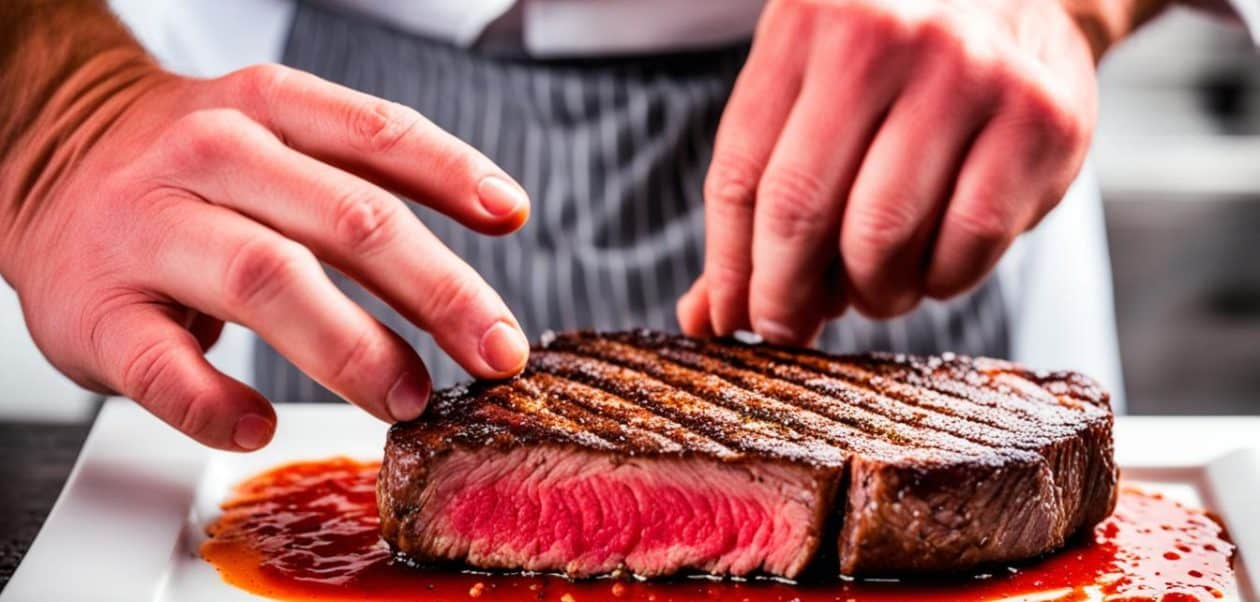
The Perfect Sear: Techniques and Tips
Start with a hot pan for good sautéing. Use a wide, shallow pan for even heat and quick evaporation. Heat the pan on medium-high before adding oil. I like to use canola or grapeseed oil because they don’t burn easily.
Let the meat brown without moving it too much. This makes a tasty crust and keeps the meat juicy. For the best results, cut the meat into even pieces so it cooks evenly. Adding a bit of baking soda to the meat helps with browning.
Temperature Control and Meat Thickness
Getting the pan hot is crucial for sautéing meats. Check if the pan is ready by dropping a bit of water into it; it should sizzle. Meats cook better when they’re at room temperature before sautéing.
Meats vary in thickness and cooking time. Lean cuts like chicken breast and pork chops are great for sautéing because they cook fast and stay tender. I use a stainless steel fry pan for the best browning. Nonstick pans are good for easy cleanup. With the right heat and techniques, I can make perfectly browned meats every time.
| Meat Type | Best Thickness | Cooking Time | Searing Tips |
|---|---|---|---|
| Chicken Breast | 1 inch | 4-6 minutes | Dry well and avoid overcrowding |
| Pork Chops | 1 inch | 5-7 minutes | Use high smoke point oil |
| Fish Fillets | 1/2 inch | 3-5 minutes | Allow skin to crisp before flipping |
| Beef Strips | 1/4 inch | 2-4 minutes | Cut against the grain for tenderness |
Breading Foods for a Crispy Crust
Breading foods is a fun way to get that perfect crispy crust and boost your meal’s flavors. Having a well-organized breading station is key to success. I set up three shallow dishes: one for flour, one for eggs, and the last for breadcrumbs. This makes the process smooth. Keeping my “wet” and “dry” hands separate keeps things tidy and fun.

Setting Up Your Breading Station
For a smooth breading station, I arrange my dishes in a way that makes moving from one layer to the next easy. Each coating gets seasoned to add flavor depth. It’s cool to know you can prep breaded items up to an hour ahead and chill them. This way, they’re ready to fry or bake when you are!
Layering Flavors and Seasonings
Layering flavors is where the magic is. I love trying out different seasoning options for the breadcrumbs. Using dried or fresh breadcrumbs, panko, ground nuts, or even crushed crackers adds a unique texture and taste. Everyone agrees that using flavored snacks for breadcrumbs boosts flavor and texture.
Using snacks like chips or pretzels as breading gives a bold, unique crust that traditional methods can’t match. Many people prefer this method for its uniqueness. As I cook, I remember that adding these unexpected ingredients brings creativity and turns the breading process into a special culinary adventure.
Classic Cooking Techniques You Need to Know
Learning classic cooking techniques is key to improving your cooking skills. Boiling and poaching eggs are two essential methods every cook should know. They make the eggs taste better and improve their texture. These skills are also the base for many dishes.
How to Boil an Egg Perfectly
Boiling eggs might seem easy, but getting it right takes focus. For soft-boiled eggs, start by boiling water until it reaches 212°F. Then, add the eggs and simmer for three to five minutes.
If you want hard-boiled eggs, cook them for seven to ten minutes. After boiling, cool the eggs in cold water. This stops them from cooking too much.
Mastering the Art of Poaching Eggs
Poaching eggs is a skill that can make your breakfast special. Start by heating water to a gentle simmer, around 190°F. Adding a bit of vinegar helps the egg whites set better.
Crack an egg into a bowl first, then slide it into the water. Cook for three to four minutes for a runny yolk. With practice, you’ll get great at making poached eggs for dishes like eggs Benedict or salads.
Learning these classic cooking techniques will boost your egg dishes. It will also make you more confident in the kitchen.
Cooking Techniques for Pasta and Grains
To improve my cooking, learning how to cook pasta and grains is key. Getting the perfect al dente pasta and fluffy rice makes meals better. With practice, I can make dishes that wow my guests.
Achieving the Perfect Al Dente Pasta
Getting al dente pasta is the goal. It means boiling it in salted water and watching it closely. Each type of pasta cooks differently, so pay attention.

| Pasta Shape | Cooking Time (Minutes) |
|---|---|
| Spaghetti | 8-10 |
| Penne | 10-12 |
| Farfalle | 12-14 |
| Fettuccine | 10-12 |
It’s important to check if the pasta is done. Taste it a bit before the recommended time to see if it still has a firm bite. This texture makes any dish better, whether it’s with marinara or Alfredo sauce.
Cooking Rice to Fluffy Perfection
Cooking rice right is key. I use the absorption method, which means one gallon of water for every pound of grains. This makes the rice fluffy. Knowing how to cook different types of rice changes my meals for the better.
| Grain Type | Cooking Time (Minutes) | Yield (Cups) |
|---|---|---|
| Brown Rice | 45 | 3-4 |
| Wild Rice | 50 | 3.5 |
| Quinoa | 15 | 3+ |
| Steel-Cut Oats | 20 | 4 |
Trying different rice dishes like risotto or pilaf opens up new possibilities. Slowly adding liquid to rice makes risotto creamy, while pilaf lets me add garnishes for extra flavor. These skills make cooking fun and improve my meals.
Understanding Cooking Methods: Baking vs. Frying
Exploring different cooking methods is key to improving my cooking skills. Baking and frying each bring unique flavors and results. Knowing the science behind these methods helps me make better choices in the kitchen.
The Science of Baking: Temperature and Timing
Baking is all about precise temperature and timing. The oven’s heat cooks food evenly, creating specific textures. For example, keeping the oven at 350ºF helps bread rise right and not get too dense.
Getting the timing right is crucial. It can turn a dish from perfect to dry and overcooked. With the right cooking science knowledge, I can make baked goods that are both tasty and have great texture.
Frying Techniques: Deep vs. Shallow Frying
Frying can make food crispy and delicious. Deep frying dips food in hot oil, making it crunchy on the outside and juicy inside. Shallow frying uses less oil, giving a lighter texture.
Both methods need the right oil temperature and cooking time for the best results. Trying out different frying techniques lets me explore new flavors and textures in my cooking.
Creating Flavor with Stocks and Sauces
Making stock and sauces is key to rich flavors. It requires patience and skill to create deep tastes. A good stock is crucial for soups and sauces. When making stock, I simmer ingredients like poultry or vegetables gently to get the best flavor.
A poultry stock can take four hours, and meat stocks up to eight hours. Adding gelatinous cuts like pork feet makes the stock smooth and rich.
The Essentials of Making a Good Stock
Remouillage, or rewetting bones and cooking them again, boosts the flavor. I start with cold water and don’t overcrowd the pot. This prevents the stock from becoming too watery.
Skimming off impurities keeps the stock clear. Using mirepoix, aromatic vegetables, helps balance the flavors. Adding herbs at the end keeps their fresh taste.
Secrets to a Delicious Homemade Gravy
Homemade gravy adds a special touch to meals. I make mine from the drippings in the roasting pan. First, I deglaze the pan to get all the tasty bits.
Then, I mix these with stock. It’s important not to salt too early if you’re reducing the gravy later. Techniques like charring onions add extra flavor to my gravies.
Mastering these methods makes my dishes unforgettable. It lets me share amazing meals with loved ones.