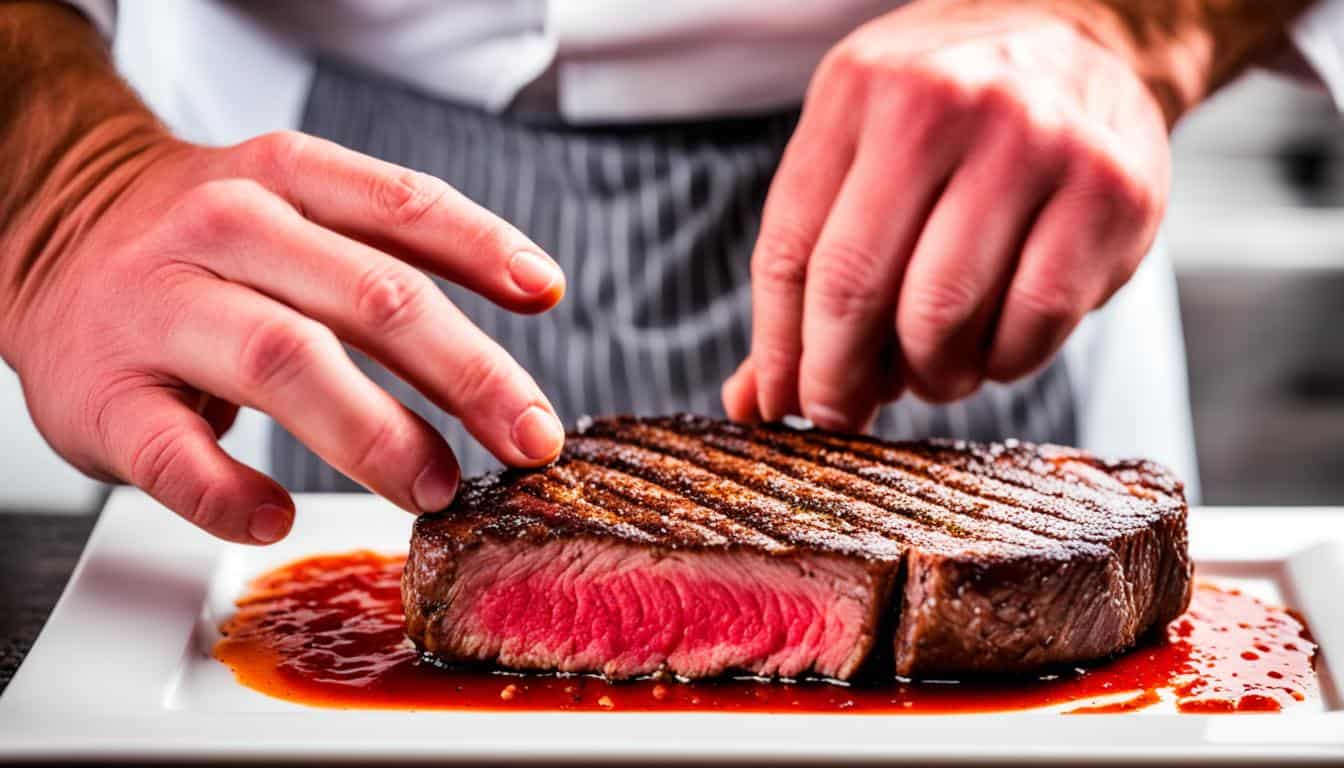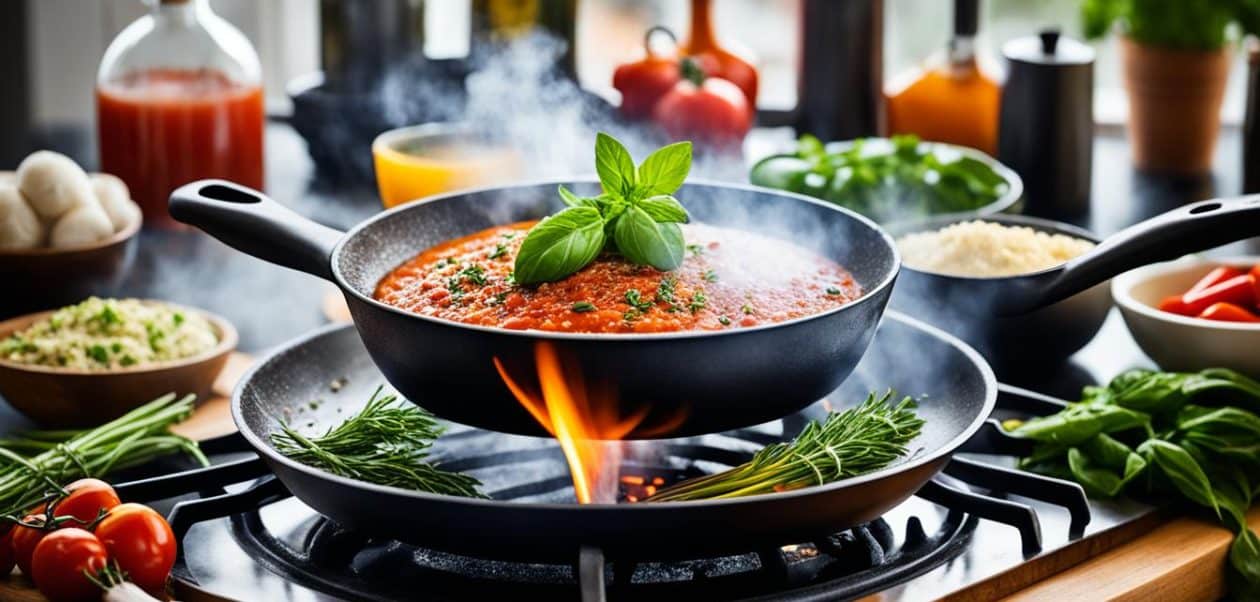
Every time I step into my kitchen, I remember a lesson from my early cooking days. I was trying to make a simple omelette but ended up with scrambled eggs. Frustrated, I dove deep into cookbooks and videos, learning every technique I could find. This journey taught me how important cooking skills are in making meals better.
Learning how to chop onions right and season food just so, makes a big difference. These skills greatly improved my cooking, showing me how crucial they are. Now, I’m excited to share these tips to help others make their cooking better too!
Key Takeaways
- Mastering cooking techniques is crucial to enhancing every meal.
- Chopping onions and making perfect eggs are fundamental skills for any cook.
- Proper seasoning, particularly using different types of salt, can significantly elevate flavors.
- Understanding the basics of cooking pasta is key to achieving al dente perfection.
- Using a chef’s knife effectively is essential for efficiency in the kitchen.
Understanding Cooking Methods: The Basics
Cooking is an art that uses heat to change our food. Learning basic cooking techniques is key for improving your cooking skills. I found that knowing basic cooking techniques can make my dishes taste better.
Cooking methods are split into two main types: dry heat and moist heat. Dry heat uses air or fat to cook food, making it brown and develop flavors. Methods like baking, broiling, grilling, and roasting fall under this category. Each method has its own way of cooking.
Grilling cooks food right over the heat, while broiling heats it from above. Roasting cooks food evenly, bringing out more flavor.
Moist heat cooking uses liquids like water or steam to cook food. This method keeps the food moist and brings out its natural taste. Boiling, poaching, and sous vide are some examples of moist heat cooking.
Learning about these cooking methods lets me try new things in the kitchen. Whether it’s stir-frying veggies, baking a dessert, or boiling pasta, knowing the right technique makes a big difference. Understanding culinary fundamentals boosts my creativity and confidence in cooking, making it fun and rewarding.
Culinary Skills Every Beginner Should Master
As I start cooking, learning key culinary skills boosts my kitchen confidence. Mastering basic chopping techniques makes cooking faster and more fun. One of my first goals is to learn how to chop onions well. Onions add great flavor to dishes, and the right way to chop them makes a big difference.
How to Chop an Onion Effectively
To get this skill right, I make sure my knife is sharp. A dull knife is not safe. I peel the onion, cut it in half from the root to the stem, and place it flat down. This way, I can slice it more easily.
I make small, precise cuts, moving through the onion carefully. To avoid tears, I suck on a teaspoon while chopping. This trick makes the process easier.
Mastering Basic Knife Skills
For beginners, knife skills are key. They include how to chop, hold the knife, and use both hands. Keeping my knife sharp and clean is also important for safety and effectiveness. Watching videos helps me learn and improve these essential skills.
Exploring Different Cooking Techniques
Exploring various cooking techniques opens up a world of flavors. Each method, like grilling, baking, or sautéing, adds its own special touch to dishes. Frying dips foods in hot oil makes them crispy, perfect for fried chicken or veggies. Sautéing cooks meats and veggies quickly, keeping their colors and tastes bright.
Knowing how to use temperature and technique is key. Dry heat cooking, above 300 degrees, browns food and boosts flavors. This is seen when roasting meats or veggies like pumpkin and cauliflower. Roasting at lower temperatures keeps moisture in and flavors rich.
Grilling is great for thick cuts of meat and gives a charred look. Broiling is for thin meats and fruits like peaches. Braising tenderizes tough meats slowly, perfect for pork shoulder. Stewing cooks ingredients in broth, making meals warm and full of flavor.
Trying out different cooking methods improves my skills and style. The more I experiment, the more creative I become. Each new technique brings joy and tasty results, making cooking a fun journey.
Dry-Heat Cooking Techniques Explained
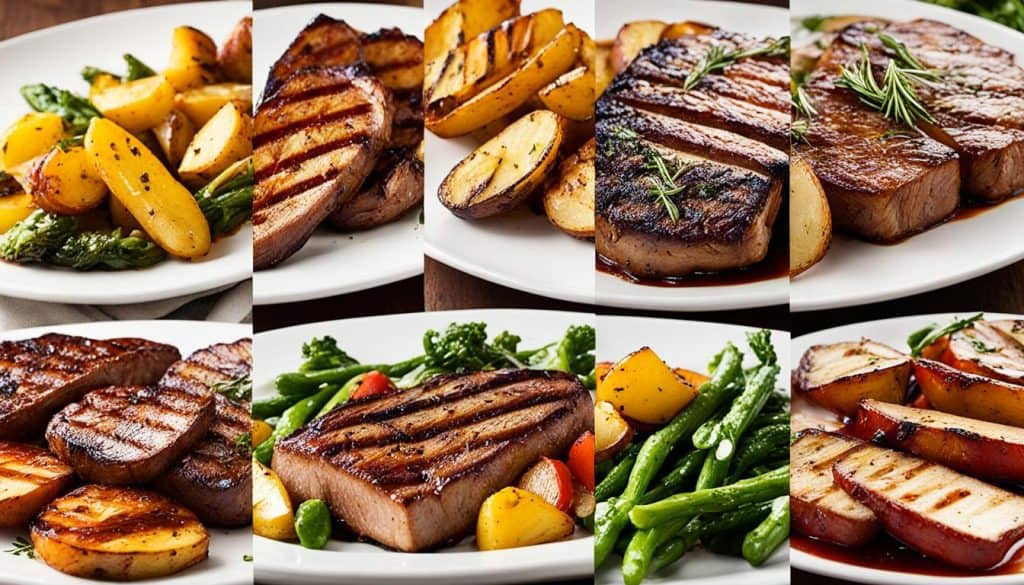
Learning about dry-heat cooking can change how I make meals. This method includes broiling, roasting, grilling, and baking. Each way of cooking adds its own special touch to the taste and texture of food, making meals taste great.
Broiling vs. Roasting: What’s the Difference?
Broiling and roasting are both dry-heat cooking methods. Broiling cooks food under high heat from above, great for quick cooking of tender meats and a nice crust. Roasting cooks food in hot, dry air, ideal for big cuts of meat and vegetables. It cooks at 300°F or more, making the outside golden and keeping the inside juicy.
Grilling: The Art of Charred Perfection
Grilling adds a unique flavor to food. It cooks food from below, giving it a smoky taste and nice grill marks. I grill meats like steaks, chicken, and veggies. The direct heat creates a tasty char that boosts the flavor.
Perfecting Your Baking Skills
Getting good at baking means knowing the right temperatures and methods for delicious treats. Baking uses dry heat at 300°F or higher, turning bread, pastries, and casseroles into something special. It’s important to measure carefully and use the right fats and flour to get the best results.
Moist-Heat Cooking Techniques
Moist-heat cooking is key for tender and tasty dishes. It uses temperatures from 140°F to 212°F. This slow cooking keeps nutrients in and makes flavors better. It’s great for cooking proteins, veggies, and stocks.
How to Properly Boil and Poach Eggs
Boiling eggs right is important. I start by bringing water to a boil at 212°F, then add eggs carefully. Timing is everything to get them just right, usually 9-12 minutes.
Poaching eggs is similar but uses water between 160°F and 180°F. This method gives eggs a soft texture. Making sure the water is simmering gently helps the egg cook evenly.
The Secrets to Cooking Pasta Al Dente
Getting pasta to al dente is key. I use salted water to add flavor and keep the pasta’s shape. Cooking it a bit less than the package says gives it a firm bite.
Checking the pasta often and tasting it helps get it just right. Remember, it will cook a bit more after draining.
Making Delicious Stocks for Soups and Stews
Stock making is vital for tasty soups and stews. I use leftover bones and veggies for flavor. Simmering ingredients gently pulls out lots of flavor without boiling over.
This method makes a broth full of nutrients and taste. A tight lid keeps moisture in, making the stock richer.
Combination Cooking Techniques to Enhance Flavor
In my culinary journey, I’ve found the magic of combining dry-heat and moist-heat methods. This mix lets me create dishes with layered flavors and varied textures. Braising is a great example. I sear the meat first to get a rich crust, then slow cook it in liquid.
This method locks in moisture and makes the meat incredibly flavorful.
Understanding how to enhance flavors is key in combination cooking. Sweetness from things like honey or fruit balances bitter and acidic tastes. For example, adding sweetness to a spicy dish helps balance the heat, making the flavors more harmonious.
Fat can also soften other tastes, adding depth to the dish. Adding butter or cream brings a rich, creamy taste that goes well with both sweet and savory flavors. I also pay attention to salt, knowing a little can greatly enhance the flavors.
Mastering these techniques lets me make meals that are full of flavors and textures. By knowing how to mix different cooking methods and understand ingredients, I can turn simple dishes into something special.
Expert Chef Tips for Flavor Enhancement
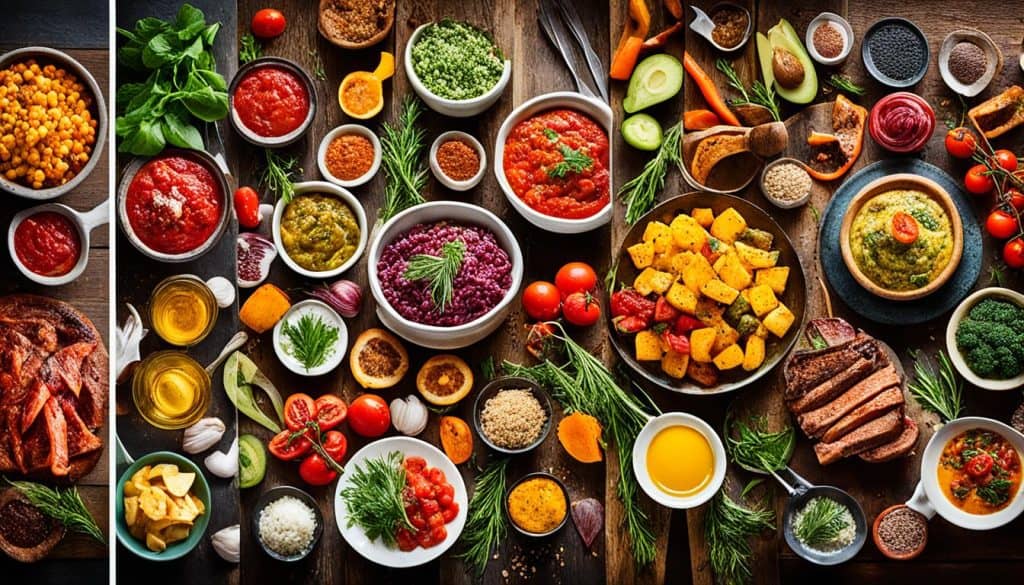
Getting expert cooking advice can change how I make each dish. I focus on seasoning at every step. This is key for the best flavor.
It’s important to balance the five basic tastes—sweet, salty, sour, bitter, and umami. A little sugar can balance bitterness, and salt can make flavors better.
Knowing how our senses affect flavor is crucial. About 80% of flavor comes from smell. So, I add fresh herbs at the right time for depth and freshness.
The way our tongues taste things can vary a lot. This means we might taste the same dish differently. It’s interesting to think about.
Using high-quality broth can make soups and sauces taste better. Adding butter to sauces makes them richer and shinier. Sometimes, I add secret ingredients like soy sauce or miso paste for an extra boost of flavor.
Choosing the right oil is important too. Each oil has its own taste and smoke point. I also remember that alcohol doesn’t fully cook off, so I use it carefully to add depth without overwhelming the dish.
Essential Kitchen Secrets for Culinary Success
Mastering essential kitchen secrets can take your cooking to the next level. Having good knife skills is key. Learning cuts like julienne, chiffonade, and brunoise is crucial in culinary school. A sharp knife is not just precise; it also lowers the risk of accidents.
Using high-quality broth is vital for enhancing dishes. It’s the base for soups and sauces, adding depth and richness. Understanding the right ratios, like two parts white rice to one part water, makes a big difference.
Embracing mise en place has changed how I prep for cooking. Having all my ingredients ready makes cooking smoother. Deglazing pans and toasting spices can greatly improve flavors, making dishes more vibrant.
Getting the balance of flavors is important. Using sugar to balance salt or acid to balance fat makes dishes taste better. Seasoning as I go ensures each ingredient stands out. Salting meat and pasta water also enhances flavors.
Managing heat is key in cooking. I heat my oil before adding ingredients to prevent sticking. Choosing oils like avocado or grapeseed allows for versatile cooking. Adding liquid when the pan is dry keeps dishes from burning.
Lastly, trusting my palate is crucial. Adjusting seasonings and finishing with vinegar or lemon juice brings out flavors. These secrets have improved my cooking skills and made it more fun.
Cooking Techniques: Elevating Your Culinary Experience
Learning about heat transfer methods is key to better cooking. By understanding conduction, convection, and radiation, I can make my cooking more efficient. Each method has its own benefits, helping me tailor my cooking to different ingredients and results.
Understanding Heat Transfer: Conduction, Convection, and Radiation
Conduction is when heat moves through direct contact. It’s great for sautéing and grilling, giving meats perfect sears and keeping them moist. Convection uses moving fluids, like hot air in ovens, to cook food evenly. This makes sure every bite is full of flavor.
Radiation is when energy waves transfer heat, often used in broiling. It adds a special flavor and texture to meats, making dishes better. Learning these methods helps me know how to cook for better taste, texture, and nutrition.
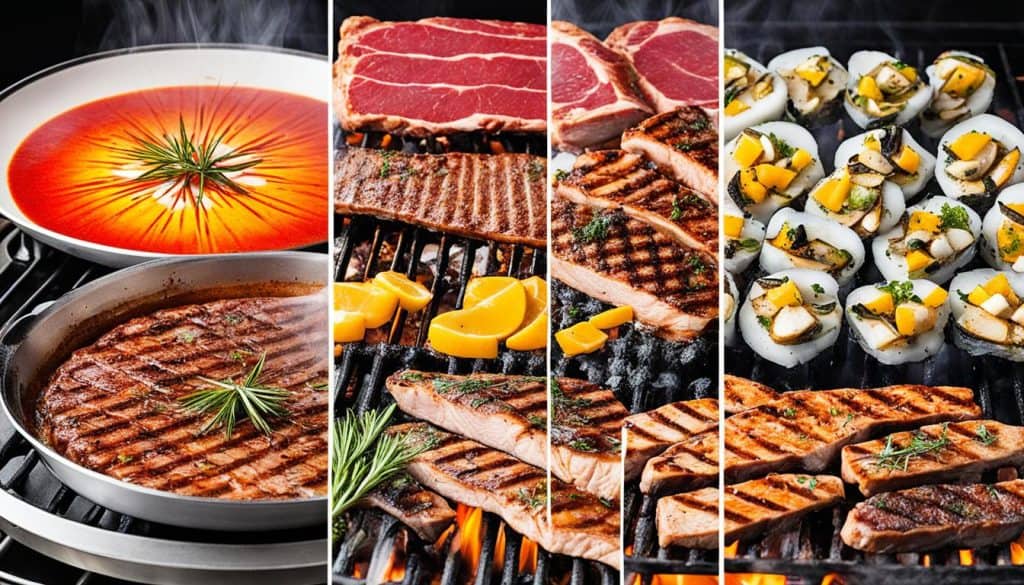
By trying different cooking methods like baking and steaming, I can make meals that are healthy and look great. I focus on using colors and flavors to make dishes that are both tasty and good for you.
Using these heat transfer methods in my cooking makes my meals more creative and consistent. Every dish shows off my culinary skills and creativity.
The Importance of Food Presentation in Cooking
Food presentation is key to a great dining experience. In today’s world, how a dish looks is very important. Beautifully arranged meals can be shared online, making a big impact.
When I focus on making meals look good, it makes eating more enjoyable. It engages the senses of sight, smell, and even sound. A well-presented dish can make the food taste better.
Putting effort into how food looks shows I care about quality. Unique ways of presenting dishes add personality and creativity. This makes eating more enjoyable and encourages people to enjoy their food more.
Key things for good food presentation are color, size, and texture. Also, how you arrange the main dish, sides, sauces, and garnishes matters. Bright colors look great on dark plates, and neutral tones work well on light ones. Using height can make the dish more exciting to look at.
Cooking schools like Escoffier teach how to make dishes look great. With these skills, I can make meals that taste amazing and look incredible. This makes them perfect to share with others.
| Element | Importance in Food Presentation |
|---|---|
| Color | Bright colors attract attention and create visual interest. |
| Texture | Adds depth and can enhance the perception of freshness and quality. |
| Height | Brings excitement and showcases creativity within the dish. |
| Focal Point | Helps to guide the viewer’s eye to the star item of the plate. |
| Proportion | Avoids overcrowding and allows each element to shine. |
Creating Flavor Profiles with Seasoning and Herbs
Building flavor profiles is a fun part of cooking. The right seasonings and herb usage can turn a simple meal into something special. Adding salt, fat, acid, and heat makes dishes more interesting. For example, a Caprese salad is great because it combines mozzarella, tomatoes, and basil with balsamic vinegar.
When I try out seasoning techniques, I like to add sweet, crunchy, and spicy flavors. A Southern Vietnamese pho is a great example of this. It uses aromatic herbs and spices for a complex taste. I make sure to balance the flavors so no one taste takes over.
For beginners, start with the main ingredient and think about what salty, acidic, or spicy flavors to add. I get inspiration from different cuisines like Indian or Mediterranean to try new flavors.
Layering flavors is key in my cooking. I start with the main ingredient and add salt, fat, and acid. Then, I add complementary ingredients, heat, sugar, crunch, and spice. Tasting my food while I cook helps me avoid overpowering the main flavor.
Using salt or different fats can really enhance flavors. Roasting vegetables brings out their natural taste. Adding lemon juice brightens the flavors and adds a refreshing touch.
Controlling the temperature in my kitchen is important for flavor. It affects how things brown and taste. I look for aromatic cues to check on my dishes. Mixing sweet and salty or sweet and bitter flavors opens up new possibilities in cooking. Building flavors is both an art and a science, pushing me to experiment and learn.
Innovative Methods for Cooking Vegetables
Exploring new ways to cook vegetables changes how I see vegetable prep. Techniques like roasting, steaming, or grilling boost their natural flavors and keep nutrients in. Roasting at 400°F (200°C) makes root vegetables sweet and keeps them tender. These healthy methods push me to try new things and find new favorites.
Choosing the right cooking method is key for veggies. Blanching brightens greens, and poaching works well for carrots and turnips. Frying at 325-350°F (160-180°C) gives veggies a crispy outside. Each new technique adds variety to my meals and helps me eat healthier.
Online grocery shopping has made getting fresh produce easy, sparking my creativity in the kitchen. Quick pickling and sautéing add flavor and make veggies fun to eat. Trying these methods lets me celebrate veggies in new and exciting ways!